


The Science of Sensory Play in Water Gardens
Children don’t just see a pond. They experience it.
The sound of water trickling over rocks, the movement of fish beneath the surface, the texture of smooth stones underfoot, and even the scent of wet plants after rain all create a powerful sensory environment.
For children, this kind of natural space supports something called sensory integration which is the process where the brain organises sensory information to support movement, learning, emotional regulation and behaviour.
And when it comes to natural sensory environments, ponds and pondless streams are some of the richest spaces you can create in a backyard.
At Pond Works, we design water features that do far more than look beautiful. They become places where children explore, move, learn and play.
What is Sensory Integration?
Sensory integration is how the brain processes information from the senses to create functional movement, coordination, emotional responses and learning.
During childhood, these systems are constantly developing. Natural environments, especially water, provide continuous multi-sensory stimulation that helps build these connections.
A pond or pondless stream engages nearly every sensory system at once.
1. Tactile Feedback: Learning Through Touch
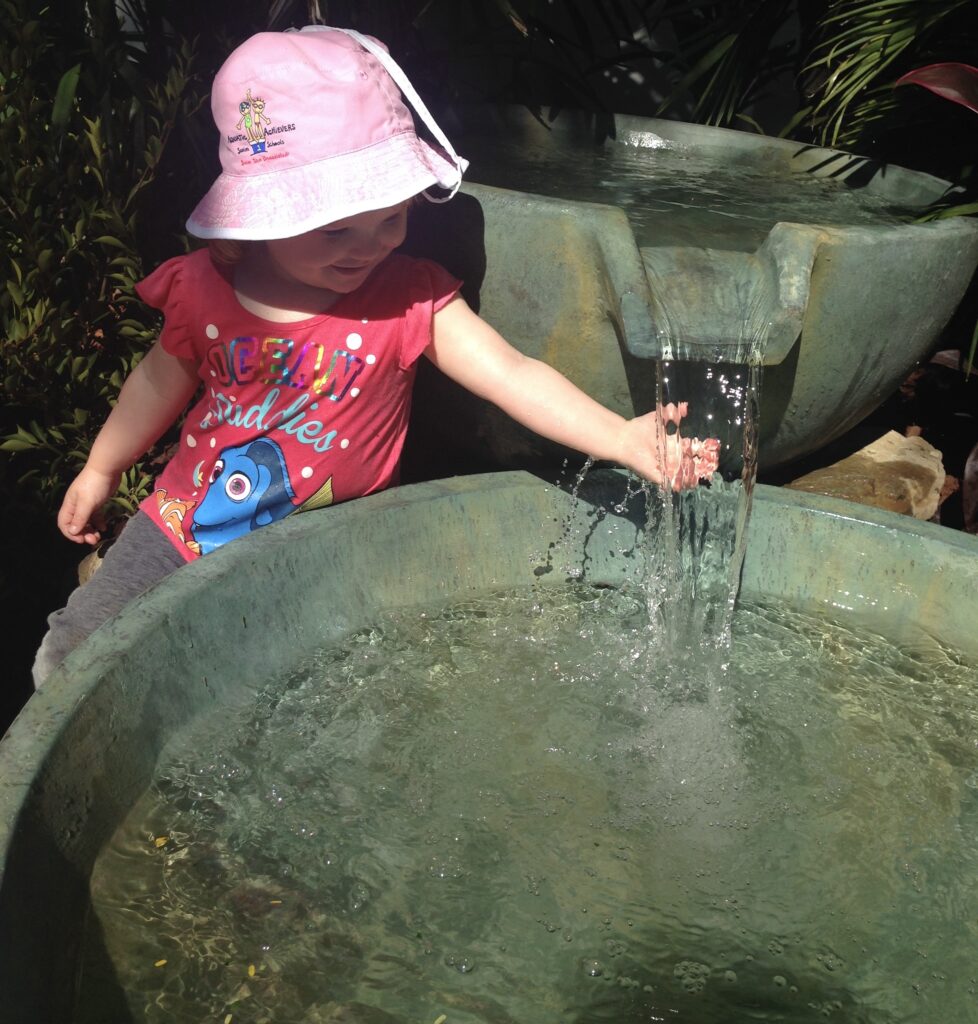
The tactile system processes touch and physical sensation.
A pond provides an ever-changing tactile experience:
- Cool water flowing over fingers
- Smooth and textured rocks
- Soft aquatic plants
- Ripples from wind or wildlife
The constant tactile feedback helps children develop:
- Motor control
- Safety awareness
- Sensory processing
- Environmental awareness
Unlike artificial playgrounds, natural water environments provide endless variation, which encourages exploration and curiosity.
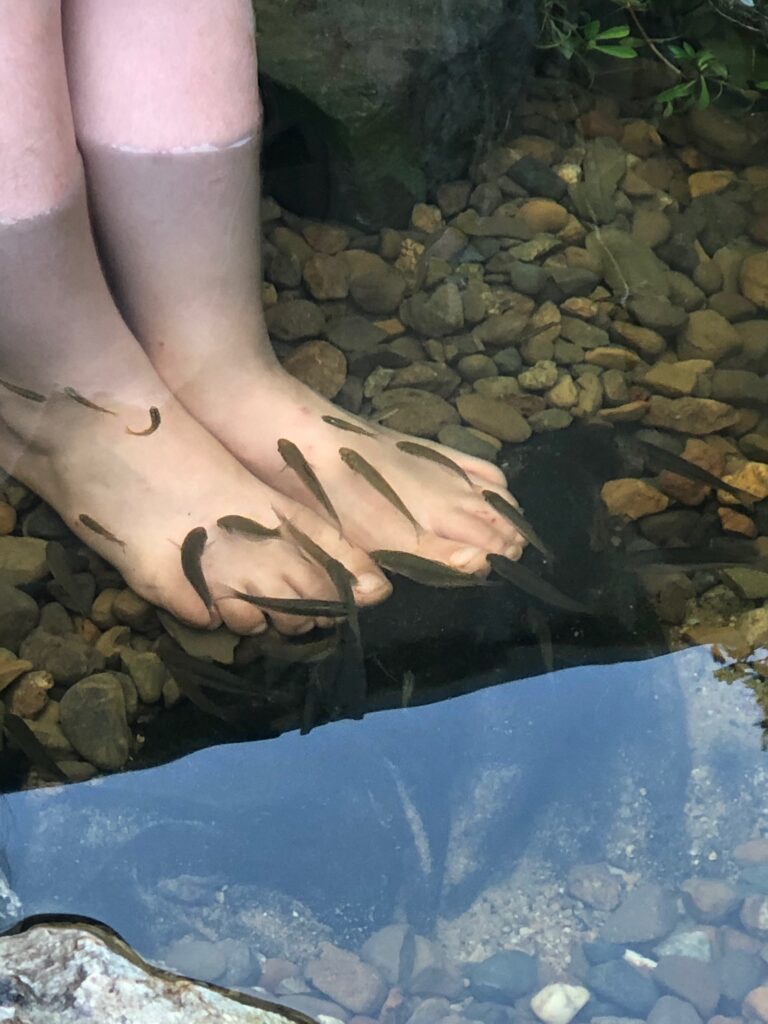
Even something as simple as sitting beside a pond with water running past their feet can create a calming sensory experience.
2. Proprioception: Understanding the Body in Space
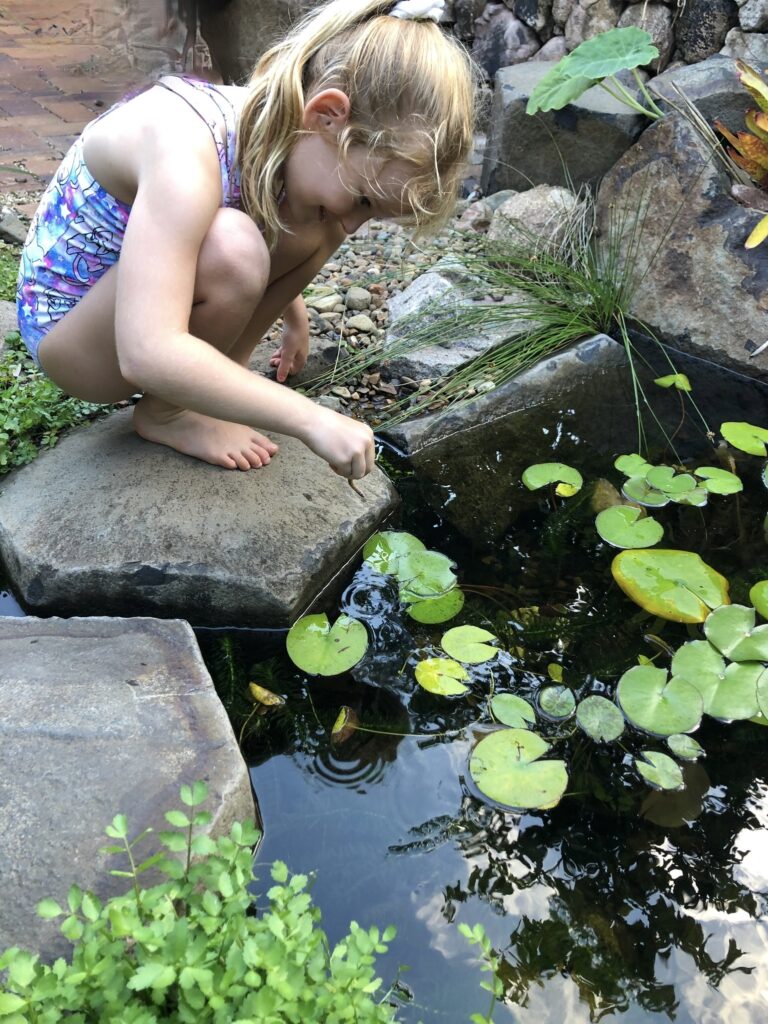
Proprioception is the body’s awareness of its position and movement.
When children move through natural landscapes around ponds, their bodies constantly adapt:
- Stepping across uneven stones
- Balancing near the water’s edge
- Squatting to watch fish
- Walking through shallow stream areas
These movements build critical skills like:
- Balance
- Coordination
- Spatial awareness
- Muscle control
- Adjusting force and movement
In occupational therapy, environments like this help children develop fine and gross motor skills by encouraging new movement patterns and strengthening muscle activation.
Natural pond landscapes essentially become an organic obstacle course for the brain and body.
3. Visual Development: Training the Eyes and Brain
Ponds are visually dynamic environments.
Water is constantly reflecting, moving and shifting which naturally strengthens several important visual skills.
Children develop:
Visual tracking – Following fish, insects, or floating leaves with their eyes.
Figure-ground perception – Learning to distinguish objects (like fish) from complex background such as plants, rocks and water movement.
Visual attention – Focusing on something while ignoring other background stimuli.
These skills are important for future abilities such as:
- Reading
- Playing sports
- Tracking moving objects
- Maintaining focus in busy environments
A pond quietly trains the eyes and brain without children even realising it.
4. Auditory Benefits: The Calming Power of Water
Running water creates one of the most calming natural sound environments available.
The gentle sound of a waterfall or flowing stream provides:
- Consistent auditory input
- Natural while noise
- Masking of harsh environmental sounds
This helps many children feel calmer and more regulated.
When combined with birds, frogs and insects, a water garden creates a natural soundscape that encourages relaxation and quiet observation.
5. Olfactory Experiences: Smell, Memory and Emotion
The olfactory system processes smell and is closely linked to the limbic system which is part of the brain responsible for emotion, memory and behaviour.
Natural water gardens introduce children to scents such as:
- Water lilies
- Wet stone after rain
- Aquatic plants
- Fresh moving water
These sensory experiences can trigger feelings of:
- Calmness
- Joy
- Curiosity
- Comfort
Many adults can recall childhood memories triggered by the smell of water or gardens because these sensory moments become deeply encoded in memory.
Learning Through Play Around Ponds
Beyond sensory integration, ponds naturally encourage play-based learning, which is fundamental to childhood development.
Children instinctively explore water environments through play.
Exploratory Play (Birth-6 months)
Using senses to explore the environment – watching reflections, movement, light and water
Social Play (Birth onward)
Children explore the environment with parents or siblings strengthening emotional attachment and connection.
Functional Play (6-24 months)
Children begin to understand how things work:
- Dropping leaves into the water
- Watching fish swim
- Moving stones or floating objects
Relational Play (12-24 months)
Understanding cause and effect:
- Splashing water
- Creating ripples
- Watching insects land and take off
Symbolic Play (18-36 months)
Imaginative play emerges:
- Pretending to be explorers
- Watching wildlife
- Creating stories around the pond environment
Water gardens naturally support these developmental stages because they provide real, interactive environments rather than static playground equipment.
Ponds vs Pondless Streams: Both Create Powerful Play Environments
At Pond Works we design both ecosystem ponds and pondless waterfalls and streams.
Both offer incredible developmental benefits for children.
Ecosystem Ponds
Provide:
- Fish interaction
- Wildlife observation
- Water plants and insects
- Visual exploration
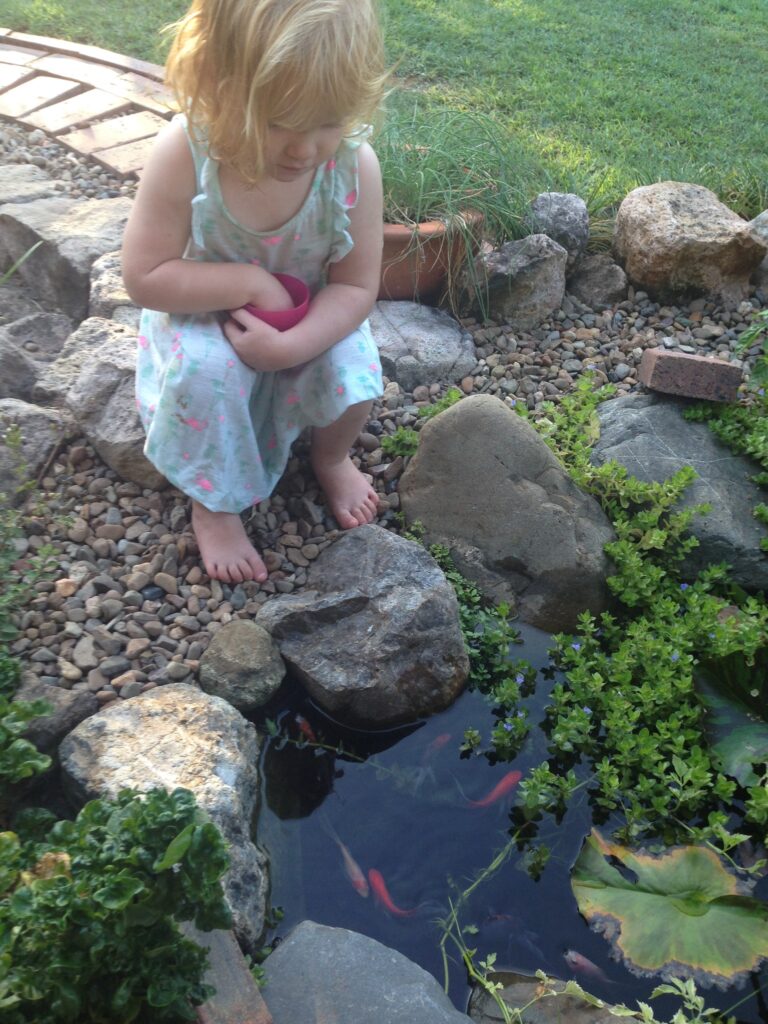
Children can spend hours watching fish, feeding fish, or tracking dragonflies and water skaters.
Pondless Waterfalls and Streams
Offer:
- Safe flowing water play
- Rock hopping and balance challenges
- Splashing and tactile exploration
- Interactive movement through the landscape
These features are fantastic for children because they encourage movement and physical exploration.
Creating Outdoor Spaces That Grow With Your Children
Once of the most rewarding parts of building water features is seeing how families use them.
Children grow up around ponds.
They:
- Feed fish before school
- Explore insects and frogs
- Sit quietly watching the water
- Create games around stepping stones and streams
Years later, those same ponds become places for relaxation, reflection and family connection.
A well-designed water garden becomes part of a child’s story.
More Than Just a Water Feature
A pond or pondless stream isn’t just landscaping.
It becomes a living sensory environment that supports:
- Physical development
- Emotional regulation
- Motor skills
- Curiosity and learning
- Connection with nature
In a world where many children spend less time outdoors, creating natural environments in the backyard can make a meaningful difference.
Pond Works designs and builds ecosystem ponds and pondless streams and waterfalls across South East Queensland including Brisbane, Sunshine Coast, Gold Coast and surrounding regions. Our team specialises in natural backyard ponds, streams and water features designed for families, wildlife, schools, kindergartens and beautiful outdoor living spaces