


Turning a Dead Space into a Living System
At Kallangur State School, what was once an under-utilised grassed area with concrete pathways has been transformed into a fully functioning pond and stream ecosystem.
What had become a dead space is not a living, engaging environment that adds value to the school both visually and educationally.
This is a look behind the scenes at how the project came together step by step.
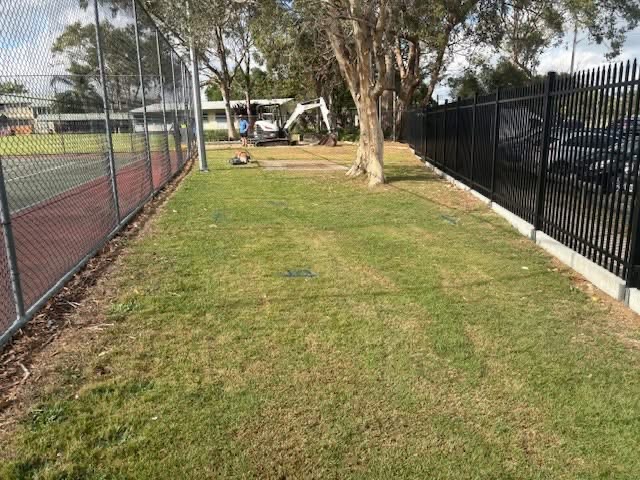
The original underutilised space at Kallangur State School before transformation into a pond, stream and waterfall ecosystem.
Removing Existing Concrete & Clearing the Site
The first stage of the project involved removing sections of existing concrete pathways to open up the area for the new design.
This included:
- Breaking and lifting the concrete
- Loading it into a skip bin
- Removing it from site with trucks
By the end of this stage, the area was cleared and ready for construction to begin.
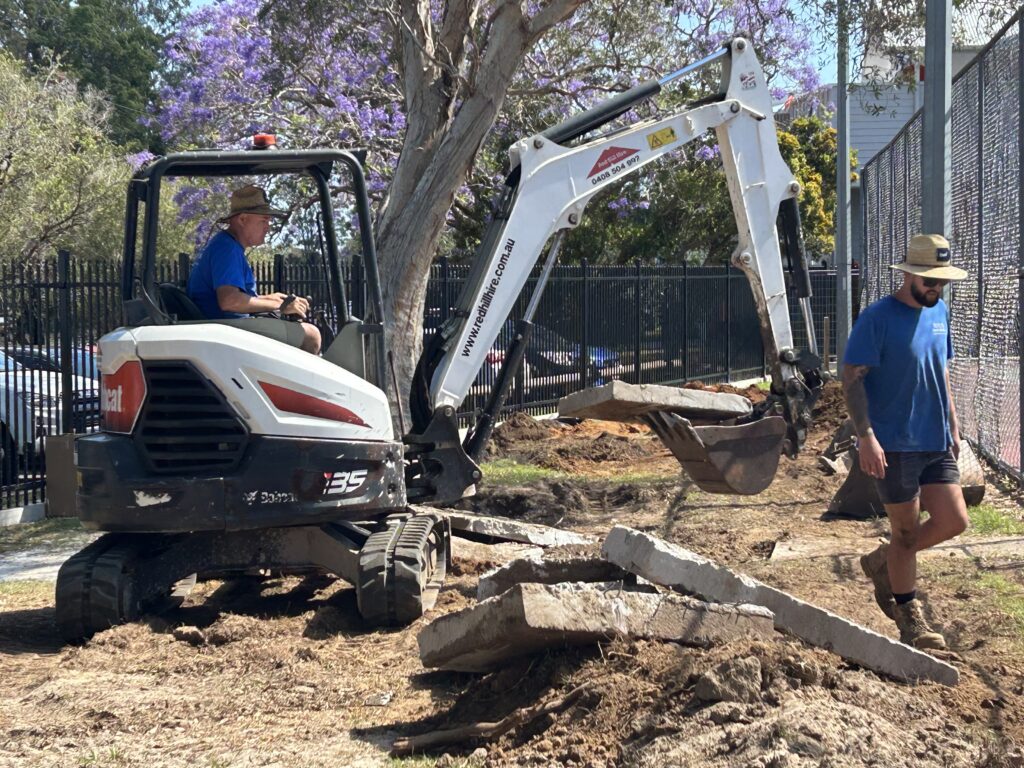
Mark operating the excavator to break up and remove the existing concrete pathway, preparing the site for the new pond and stream installation.
Trenching for Water Supply
Before starting on the pond and stream, the water supply was installed to the area.
This involved
- Digging trenches to run the water line
- Positioning connections for a reliable supply
- Completing this work before major construction began
Carrying out this step early ensures the system functions properly without needing to revisit the area later.
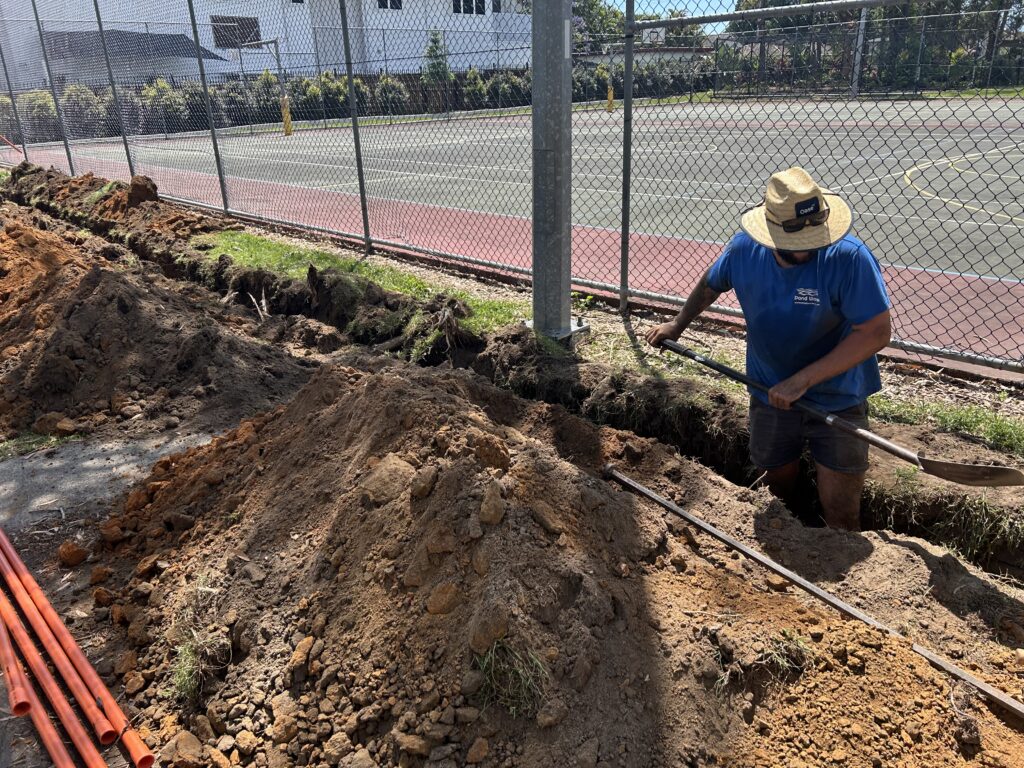
Sean digging the trench to install the water supply line before construction of the pond and stream system began.
Excavation: Shaping the Pond & Stream
With the site cleared and infrastructure in place, excavation began.
Machinery was used to:
- Form the main pond basin
- Shape the stream channels
The team then refined the area by hand:
- Adjusting levels
- Shaping edges
- Creating natural contours for water flow
This stage is where the space begins to transition from construction site into landscape.
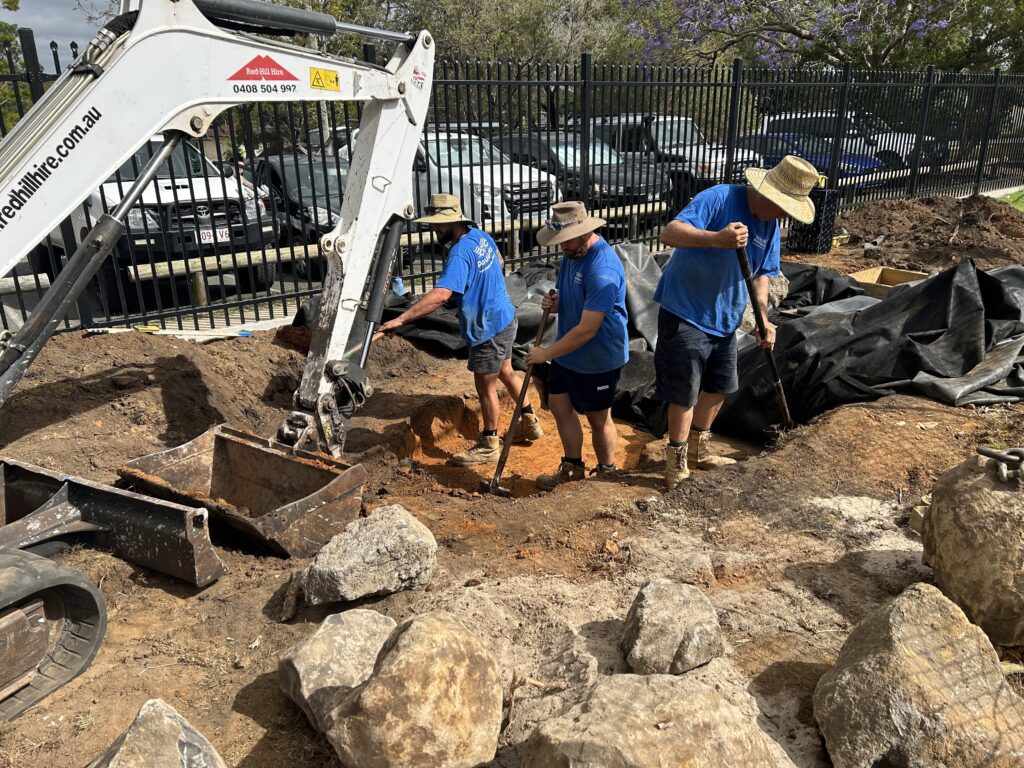
The team carrying out detailed hand refinements after excavation to shape the pond and stream more naturally following machinery works.
Plumbing & Internal Infrastructure
With the structure formed, the internal plumbing system was installed.
This includes:
- Pipework connecting the pond, stream and waterfalls
- Circulation systems to maintain water quality
- Layout designed for long-term access and maintenance
Although not visible once complete, this is what ensures the system performs reliably.
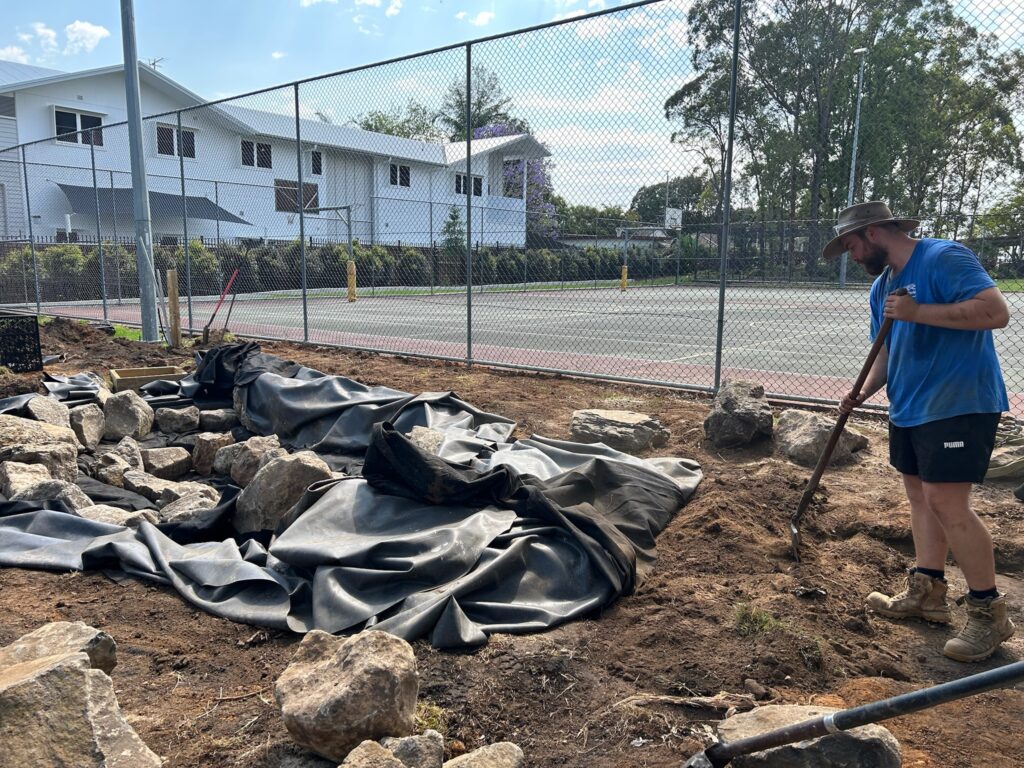
Bailey preparing for the next stage of the pond and stream build at Kallangur State School.
Liner Installation & Structural Build
The core structure of the pond was then installed.
This involved:
- Laying protective underlay
- Installing and securing the pond liner
- Ensuring a precise fit across all areas
Accuracy at this stage is essential for long-term durability.
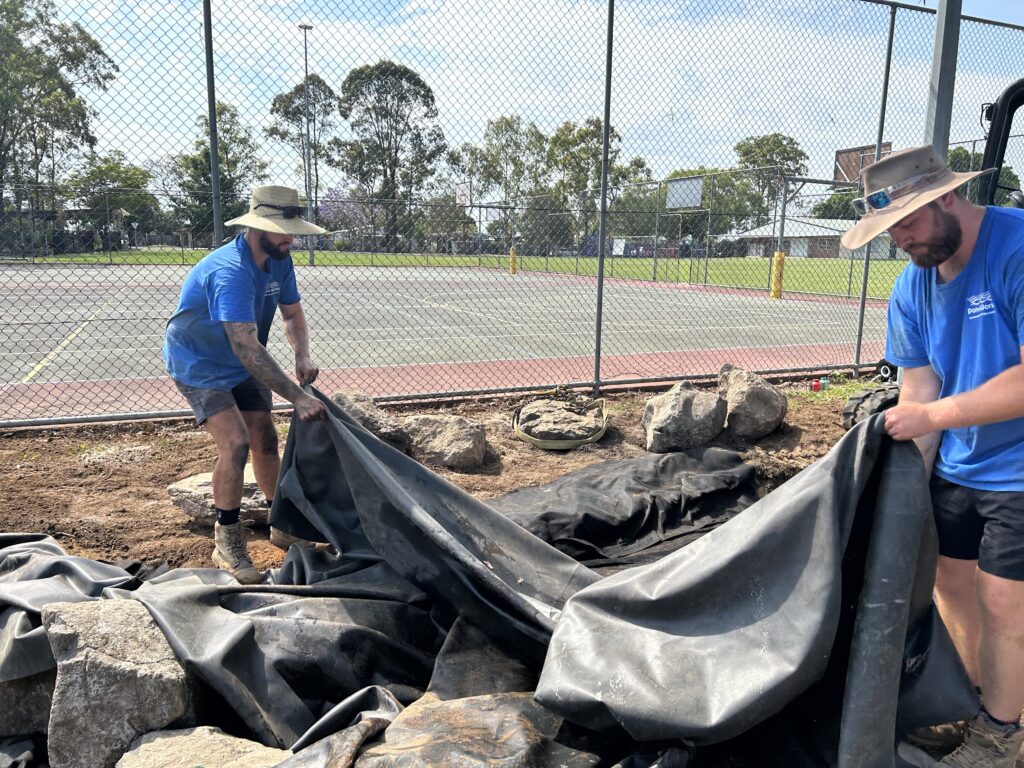
Sean and Bailey positioning the pond liner into place as part of the pond and stream construction.
Rock Placement: Building the Landscape
Rock placement is where the pond begins to take shape.
The team:
- Positioned large structural rocks
- Built the pond edges
- Formed the waterfall and split stream
- Created stable and usable access points
Each rock plays a role in both the function and appearance of the finished system.
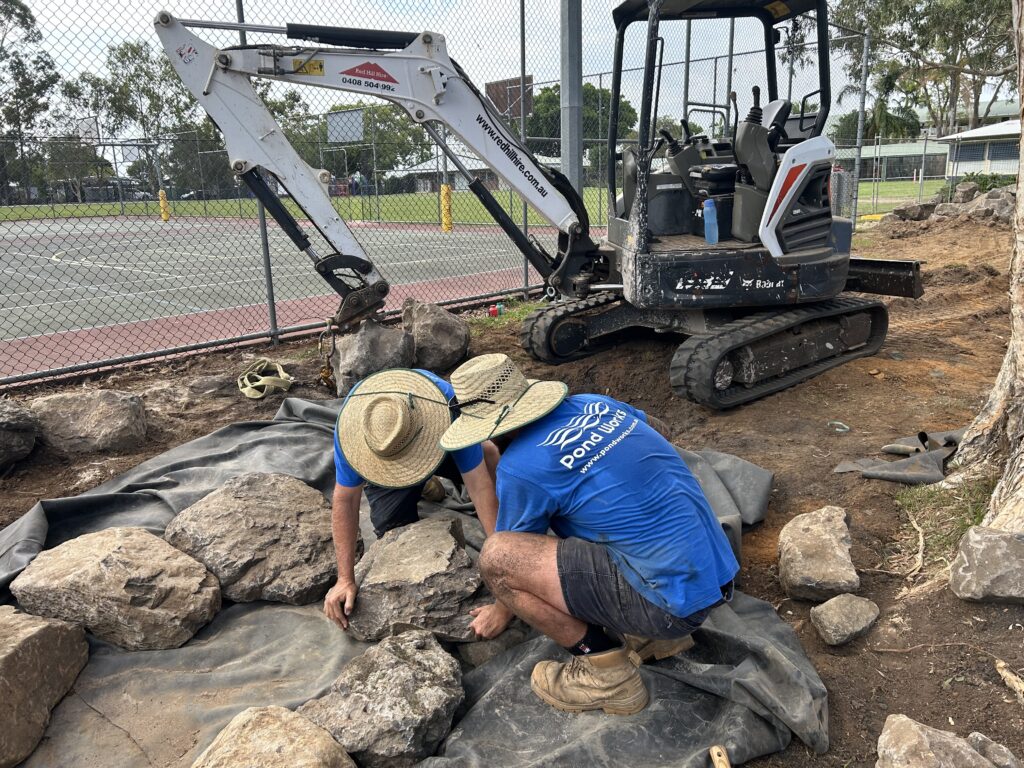
Mark and Sean carefully positioning a rock as part of the structural build for the pond and stream system.
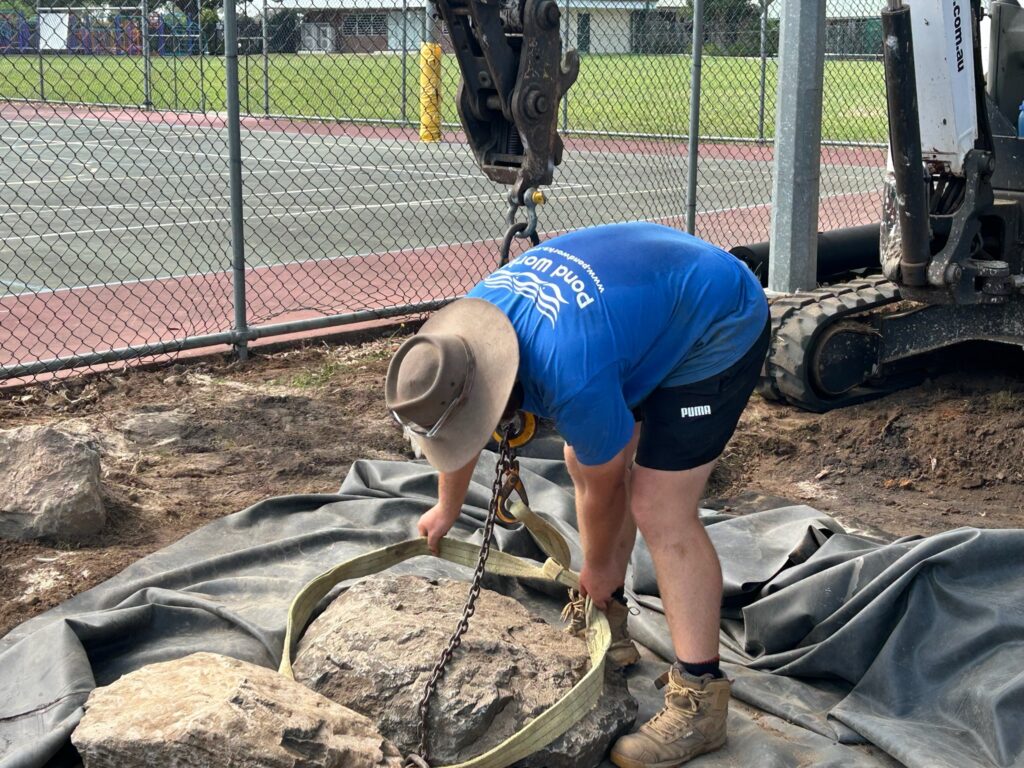
A Pond Works team member preparing to safely sling and position a large rock as part of the pond and stream build.
Constructing the Two Waterfalls
This project includes two waterfalls:
- One flowing directly into the pond
- One positioned at the top of a split stream
These features:
- Improve circulation
- Add oxygen to the water
- Bring movement and sound into the space
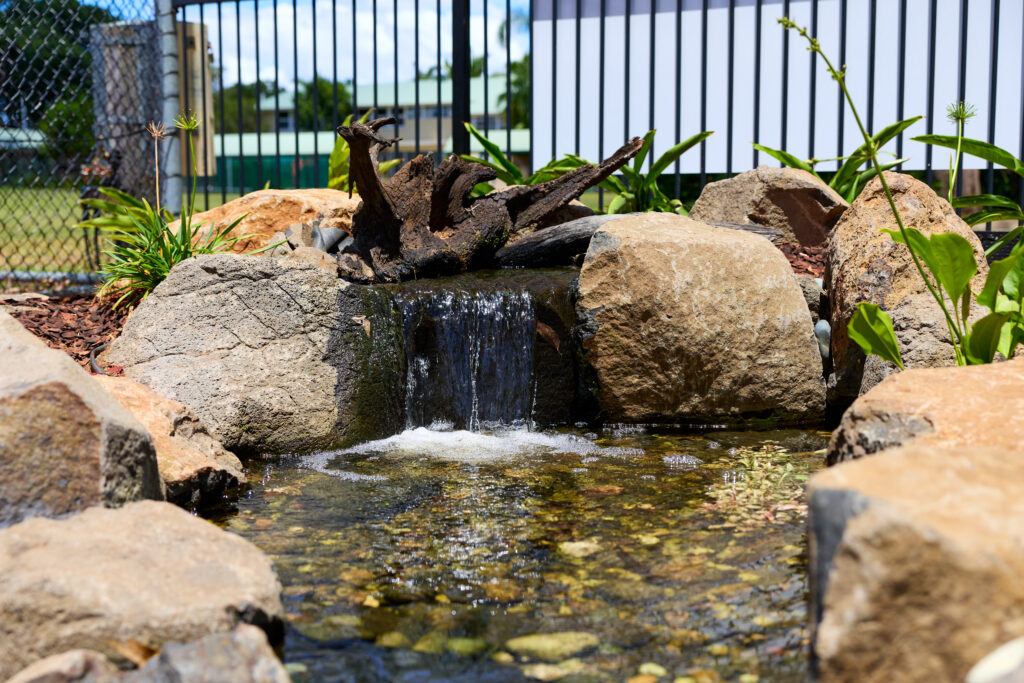
The upper waterfall positioned at the top of the split stream, feeding water through the landscape into the pond system.
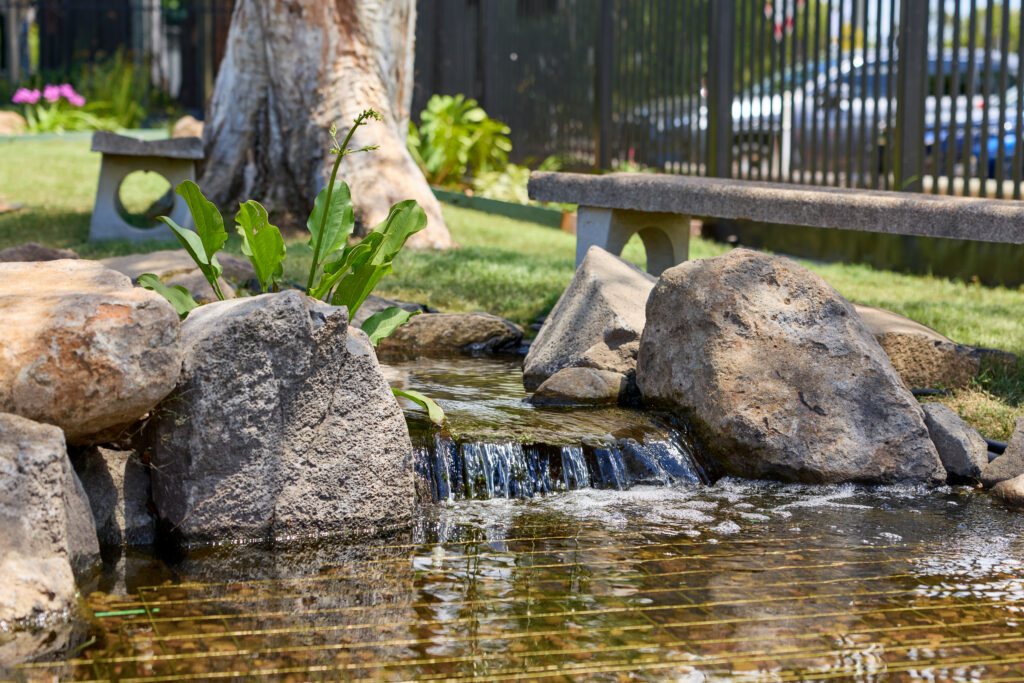
A small waterfall flowing directly into the main pond, adding movement and circulation to the system.
Installing the Safety Grid System
In a school environment, safety requirements are a key part of the design.
To comply with guidelines around open water depth, this pond includes a reinforced safety grid beneath the water surface.
This system:
- Ensures there is no accessible body of water deeper than approximately 250mm
- Sits beneath the finished surface while maintaining the natural appearance of the pond
- Allows the space to remain interactive while meeting school safety expectations
This is one of the most common concerns schools raise when considering a pond, and this approach provides a practical, effective solution.
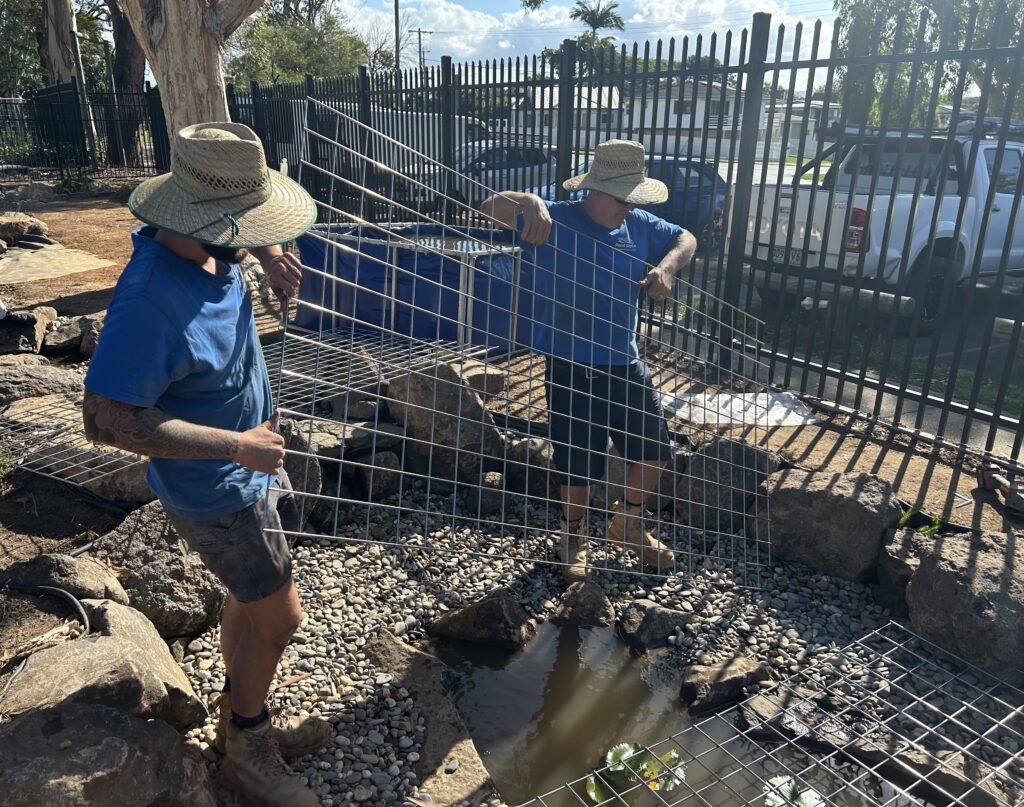
Installing the safety grid system beneath the pond area to meet school safety requirements
Pebble Beach Edge – Custom Safety & Design Solution
To enhance the usability and engagement of the space, a pebble beach zone was incorporated as a deliberate feature within the design.
A traditional sand edge was not suitable due to maintenance and displacement issues. Instead, the team developed a more stable and controlled solution.
This involved:
- Installing pebble material
- Ensuring all stones were securely fixed in plae
- Creating a stable, long-lasting shoreline
This approach also improves safety by:
- Reducing the likelihood of stones being thrown
- Preventing movement and displacement over time
- Maintaining a clean, controlled edge around the water
This was a custom design solution developed specifically for this site, tailored to both environmental conditions and school safety requirements.
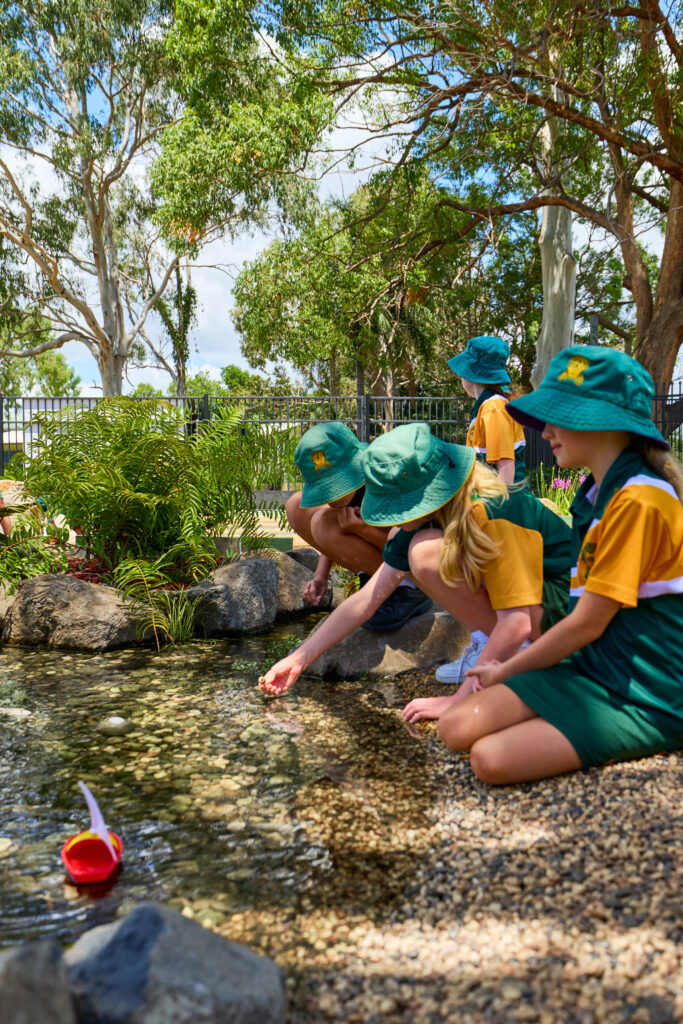
Students interacting with the new pebble beach and stream area within the Kallangur State School pond environment.
Wetland & Aquatic Planting
To establish the ecosystem, we installed the initial wetland and aquatic planting.
This included:
- Wetland planting zones
- Key aquatic plants
- Edge planting to soften and integrate the feature
These plantings:
- Begin the natural filtration process
- Support water quality
- Help the pond settle into the surrounding landscape
The school then added their own touches, expanding on the planting and continuing to develop the space.
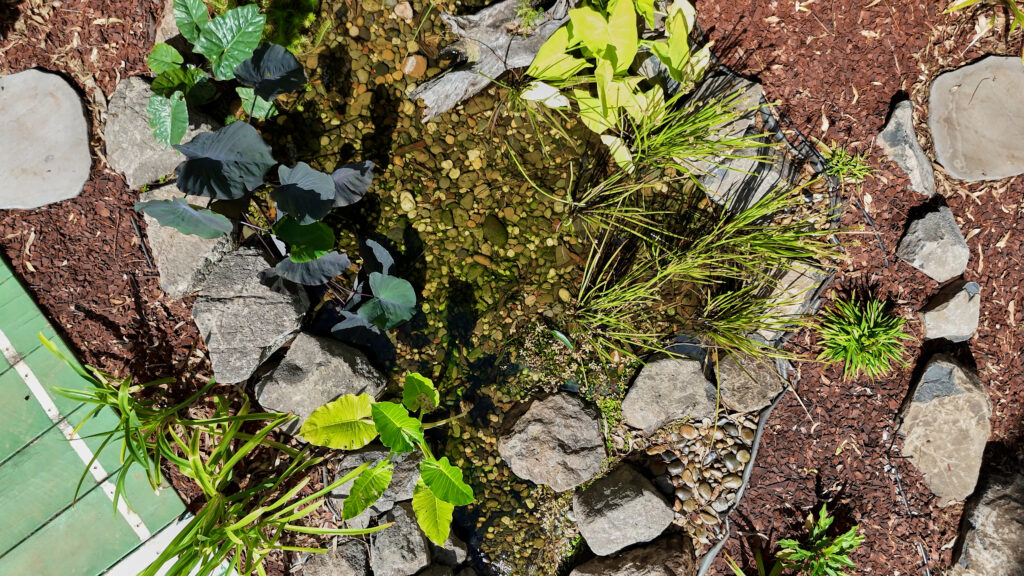
Overhead view of the wetland planting zones establishing a natural filtration edge within the pond system.
Introducing Fish & Bringing the System to Life
Once the system was established, fish were introduced to complete the ecosystem.
The species selected fro the pond was the ornate rainbow fish (Rhadinocentrus ornatus), a native Australian fish known for thriving in natural aquatic environments.
Over time, the pond naturally begins to attract:
- Frogs
- Insects
- Birdlife
This creates an evolving environment that supports ongoing learning and observation.
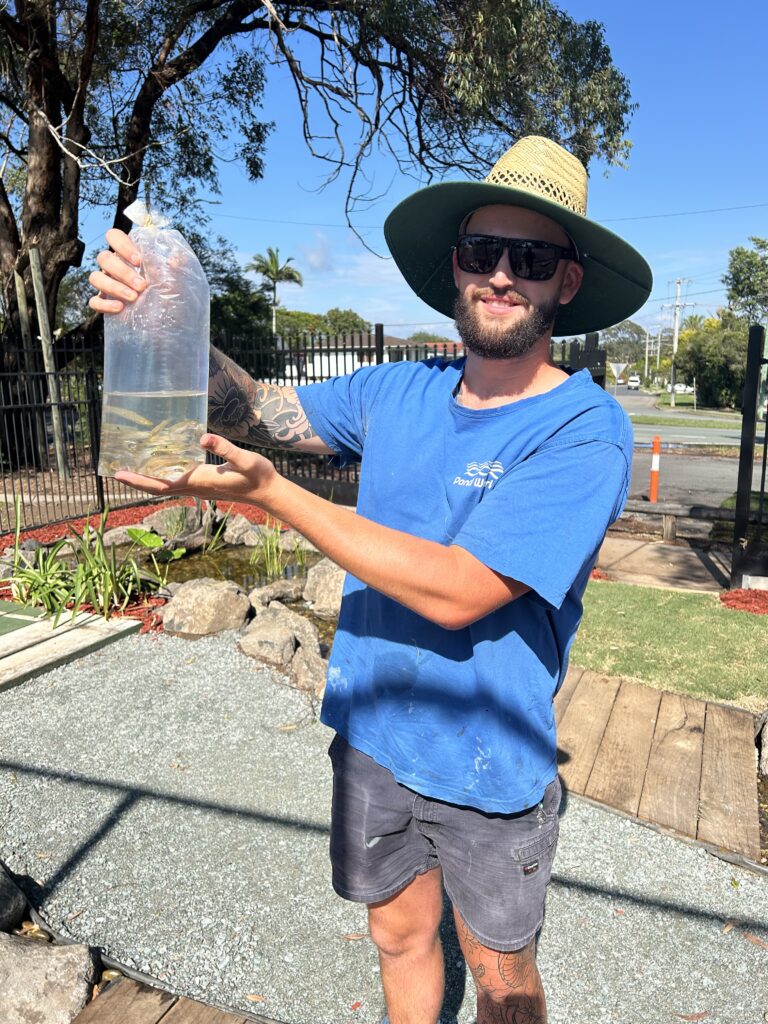
Sean preparing to release Rhadinocentrus ornatus (ornate rainbowfish) into the newly completed school pond.
The Finished Result – Built to Be Used
What started as a dead space with grass and concrete pathways is now a living, functional part of the school environment.
A space designed not just to be seen, but to be experienced, explored and learned from.
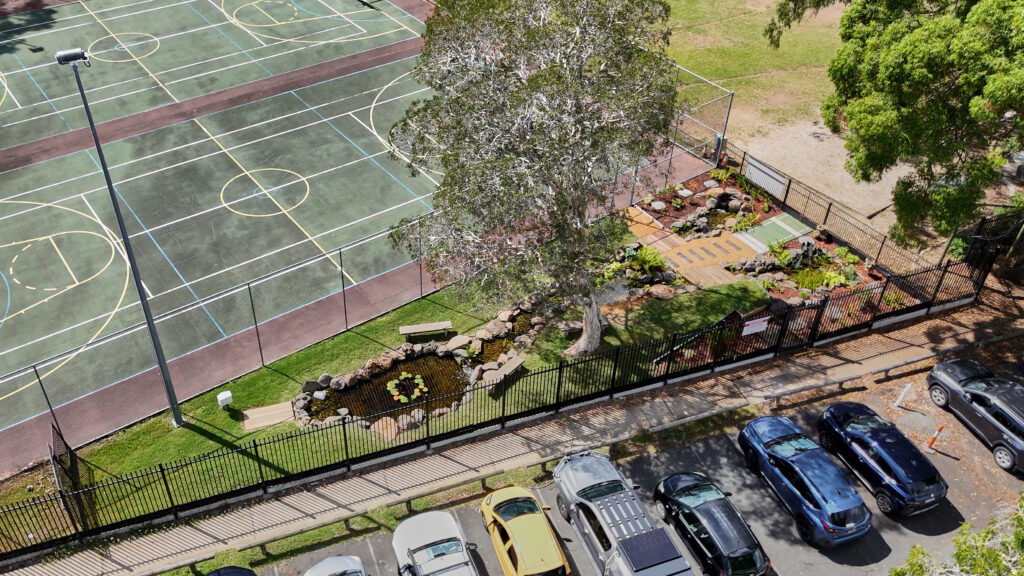
Drone view of the completed pond, stream and waterfall system integrated into the Kallangur State School grounds.
Why This Matters for Schools
This project demonstrates what goes into building a pond properly within a school environment.
It’s not just about the final result. It’s about:-
- Careful planning and sequencing
- Safe, compliant construction
- Building a system that will perform long-term
At Pond Works, this is the standard applied to every school project.
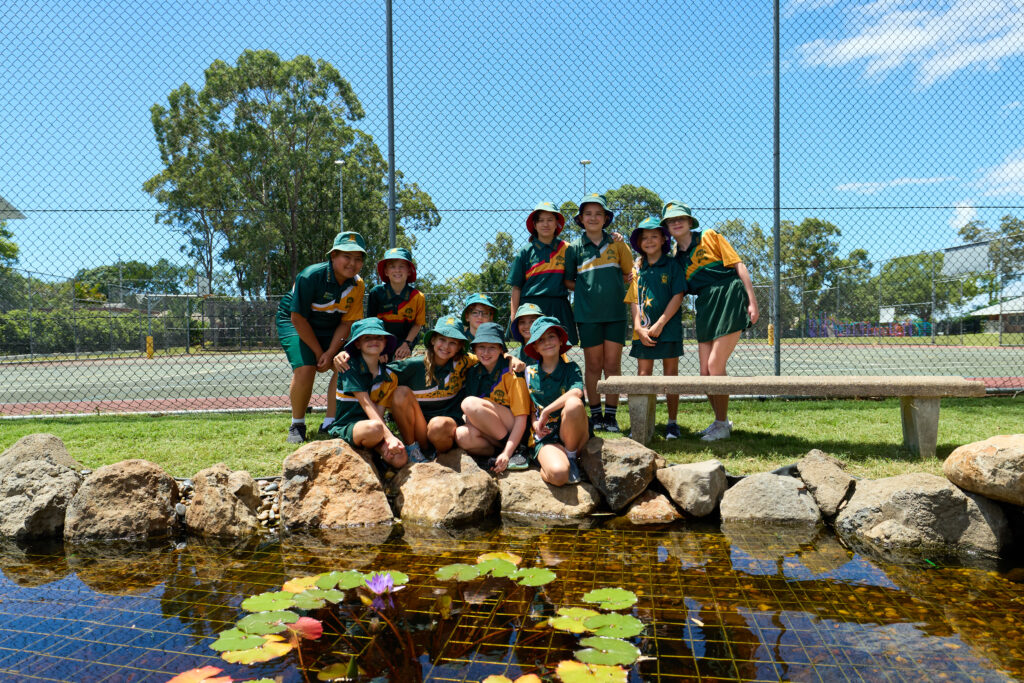
Senior leaders from Kallangur State School gathered beside the completed pond, stream and waterfall system