


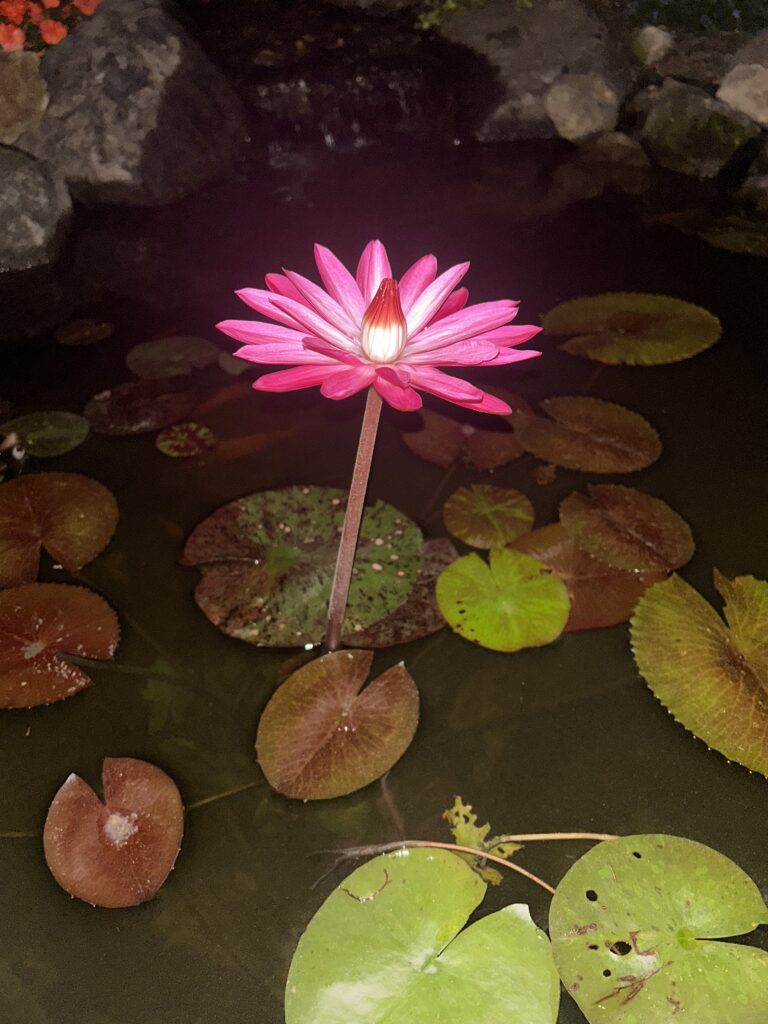
A clear view of Nymphaea Antares showing its deep red bloom and lily pads across the pond surface in a Queensland backyard setting.
If you want a pond that changes character after sunset, nocturnal water lilies are one of the most underrated additions you can make. While most ponds plants close up during the evening, night-blooming lilies do the opposite. They open late afternoon and stay beautifully active through the night.
For backyard ponds across Brisbane and South East Queensland, Nymphaea Antares is one of the most striking examples of this group.
What is a Nocturnal Water Lily?
Nocturnal water lilies (also called night-blooming water lilies) are tropical aquatic plants that flower in the evening rather than during the middle of the day.
Instead of relying on morning sun like hardy lilies, they are adapted to warm climates and tend to produce larger, more dramatic blooms with strong visual impact in low light.
They are especially well suited to:
- Evening outdoor entertaining areas
- Backyard fire pit zones
- Resort-style garden ponds
- Warm subtropical climates like Queensland
- Low-light feature ponds with lighting
The result is a pond that feels alive at night, not just during the day.
Why Nymphaea Antares Stands Out
Nymphaea Antares is one of the most visually powerful nocturnal water lilies available. It produces deep red blooms that stand out strongly against dark water, especially when paired with subtle pond lighting.
Key features include:
- Rich crimson to deep red flowers
- Large, multi-petalled blooms
- Evening and night-time flower cycle
- Strong tropical visual character
- Excellent performance in warm climates
In a well-designed pond, it becomes a true focal point after dark.
Perfect for Queensland Ponds
In Brisbane and surrounding regions, nocturnal water lilies perform particularly well due to long warm seasons and stable temperatures.
Unlike cooler climates where growth can slow dramatically, Queensland conditions allow these lilies to thrive for much of the year.
They are especially effective in ponds that are used in the evenings, where they add a completely different layer of enjoyment compared to daytime viewing.
A pond with Nymphaea Antares feels:
- More dynamic
- More tropical
- More immersive after sunset
- More connected to outdoor living spaces
How Nocturnal Water Lilies Behave
One of the most interesting aspects of nocturnal lilies is their daily rhythm.
Typically:
- Buds begin to open in late afternoon
- Flowers fully open at dusk
- Blooms remain open through the night
- Flowers gradually close the following morning
This creates a natural “day and night” transformation in the pond’s appearance.
It also means the best time to enjoy them is exactly when most people are outdoors relaxing.
Growing Nymphaea Antares successfully
Like most tropical water lilies, Nymphaea Antares performs best when conditions are stable and warm.
Ideal growing conditions include:
- Full sun exposure for most of the day
- Warm water temperatures
- Nutrient-rich aquatic planting medium
- Sheltered pond conditions (avoid excessive splash zones)
- Adequate surface space for leaf spread
In Queensland, they generally establish well and become more productive as they mature.
Benefits for Pond Ecosystems
Beyond aesthetics, nocturnal water lilies provide several practical benefits for backyard ponds.
They help:
- Shade the pond surface
- Reduce algae growth by limited light penetration
- Provide shelter for aquatic life
- Stabilise water temperature in hot weather
- Improve overall pond balance
Their floating leaves also help soften reflections and create a more natural, established look.
Designing a Pond Around Night Bloomers
One of the most effective ways to use Nymphaea Antares is to design the pond with evening viewing in mind.
This can include:
- Soft landscape lighting under foliage
- Rock or timber edging that reflects warm light
- Gentle waterfalls or trickling water features
- Seating positioned near the pond edge
- Darker pond liners or deeper water sections for contrast
When combined properly, the lily becomes part of the larger night-time outdoor experience rather than just a plant.
Why Night Blooming Lilies Are Underrated
Most pond owners focus heavily on daytime appearance, but ponds are often used just as much, if not more, in the evening.
Nocturnal water lilies shift that focus by:
- Adding colour when other plants close
- Creating movement and interest after dark
- Enhancing lighting design effects
- Extending the visual life of the pond into night hours
Nymphaea Antares in particular adds a dramatic, almost theatrical quality that daytime plants simply cannot replicate.
Availability and Seasonal Supply
In Queensland, nocturnal water lilies such as Nymphaea Antares are not always available year-round, as their supply can be seasonal depending on growing conditions and stock.
For established pond owners, lilies can often be introduced during maintenance visits when conditions are suitable and stock is available.
Pond Works also supplies and installs selected water lilies during scheduled maintenance visits, including seasonal varieties when they are in stock. This allows pond owners to upgrade or refresh planting without needing to source plants separately.
Final Thoughts
If you are looking to elevate a pond beyond standard planting, nocturnal water lilies are one of the most effective ways to do it.
Nymphaea Antares brings bold colour, tropical character and a completely different viewing experience after sunset.
For ponds in Brisbane and across South East Queensland, it is a standout choice for anyone wanting a more immersive and atmospheric outdoor space, especially in the evenings when the garden comes alive in a completely different way.
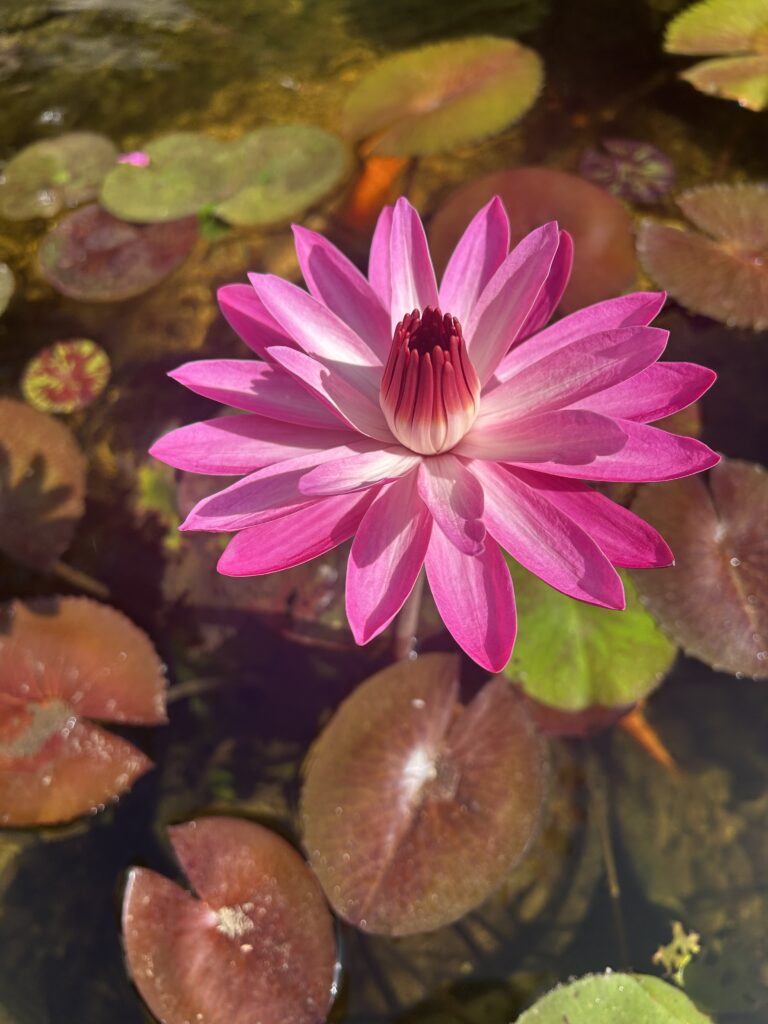
The deep red blooms of Nymphaea Antares stand out beautifully from an overhead view, showing the structure and spread of the lily across the pond surface.