


A Simple Guide for Healthier Fish and Cleaner Ponds
One of the most common questions we hear at Pond Works is:
“How much should I feed my goldfish?”
It sounds like a simple question, but feeding too much is actually one of the biggest causes of poor water quality, algae problems and unnecessary pond maintenance.
The good news is that goldfish are usually far more resilient and require far less food than many people think.
How Much Should Goldfish Eat?
As a general guide, only feed your goldfish a small amount they can comfortably consume without leaving excess food behind.
If food is left floating or sinking to the bottom after feeding, your likely feeding too much.
Goldfish are natural grazers and will continue searching for food throughout the day, even when they’ve already eaten enough. They naturally forage through gravel, browse on algae, and nibble on aquatic plants as part of their normal behaviour.
Because of this, constantly feeding hungry-looking fish usually creates more problems than benefits.
Why Overfeeding Causes Pond Problems
The more food added to a pond, the more waste the fish produce.
The extra waste breaks down into nutrients that fuel:
- Algae blooms
- Murky water
- Sludge build-up
- Increased filter load
- Higher maintenance requirements
Many pond issues actually begin with overfeeding rather than filtration problems.
A lightly fed pond is often a healthier and more balanced pond overall.
Goldfish Need Variety in Their Diet
Goldfish are omnivorous, meaning they can benefit from a varied diet rather than only dry pellets or flakes.
Healthy treats can include:
- Shelled peas
- Blanched lettuce
- Broccoli
- Watermelon
- Small amounts of orange
Occasional protein-rich foods such as bloodworms, blackworms, shrimp or freshwater mussel can also be offered in moderation.
Aquatic plants are equally important in pond systems. Plants such as:
- Elodea
- Vallisneria
provide natural fibre and grazing opportunities that help support digestion and overall fish health.
How Often Should You Feed Goldfish?
Pond Goldfish
In a balanced outdoor pond, goldfish already have access to natural food sources including algae, plant matter, insects and biofilm.
For most Brisbane ponds, feeding 2-3 times per week is generally sufficient.
The lower feeding approach helps:
- Maintain better water quality
- Reduce algae growth
- Lower nutrient build up
- Minimise maintenance
Aquarium Goldfish
In aquariums fish have less access to natural grazing, so feeding once daily is usually appropriate.
Feeding Goldfish in Winter
Here in Brisbane, our mild climate measures goldfish remain reasonably active throughout the year.
However, in colder climates, fish metabolism slows dramatically during winter. Feeding too heavily in cold water can create digestive problems because the fish cannot properly process the food.
In freeze-thaw regions, feeding should be greatly reduced or stopped during the coldest periods until temperatures rise again in the spring.
Quality Fish Food Matter
Not all fish food is equal. Good quality food helps support:
- Fish health
- Colour development
- Immune function
- Cleaner water conditions
At Pond Works, we can also supply quality fish food during maintenance visits, providing pond owners with a reliable food option that we’ve found works well for maintaining healthy fish and balanced pond systems.
Final Thoughts
When it comes to feeding goldfish, more is not always better.
Feeding lightly and allowing fish to naturally graze helps create:
- Healthier fish
- Clearer water
- A more balanced ecosystem
- Less ongoing maintenance
If you’re unsure whether your pond is balanced correctly, the team at Pond Works can assist with professional pond maintenance and water quality management throughout Brisbane and South East Queensland.
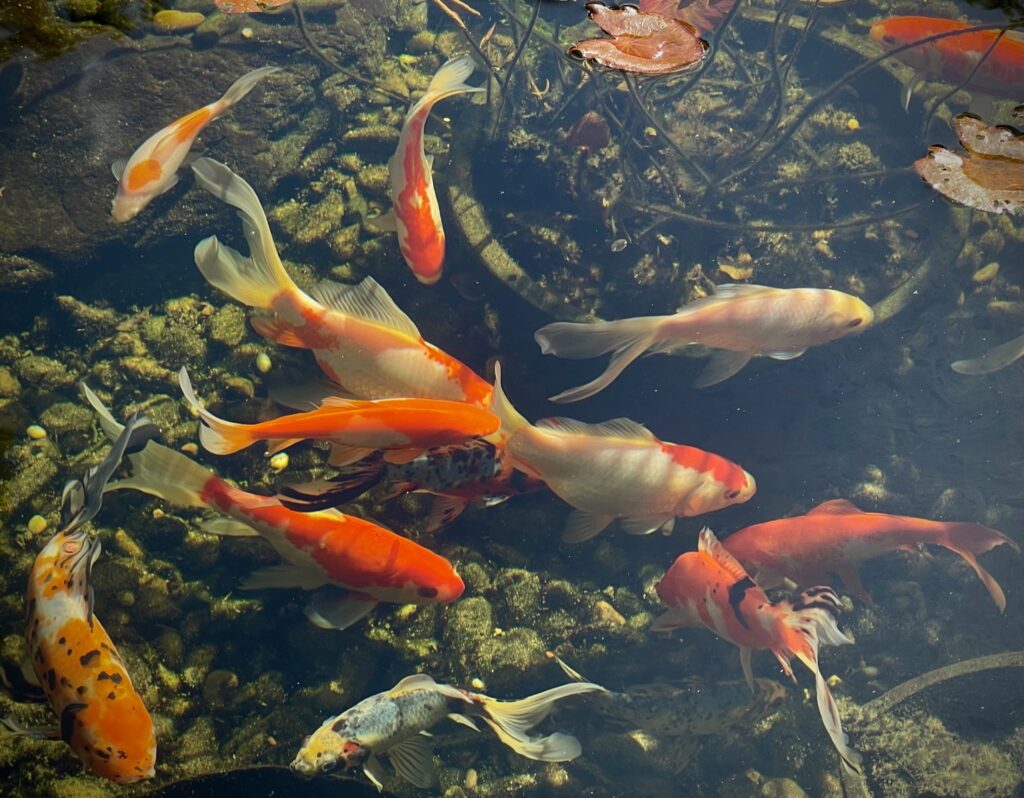
Healthy goldfish swimming in a well-balanced pond ecosystem