


If you’ve noticed your pond becoming a little quieter during winter, don’t worry—it’s all part of nature.
Unlike the colder parts of Australia, winter in South East Queensland is generally mild. While your pond doesn’t “shut down”, it does slow down. Fish become less active, turtles spend more time basking, aquatic plants reduce their growth, and your pond’s natural biological processes work at a slower pace.
Understanding these seasonal changes will help you care for your pond properly and have it thriving again when the warmer weather returns.
Winter in South East Queensland Is Different
Much of the pond advice you’ll find online comes from countries where ponds freeze over or from southern parts of Australia with much colder winters.
Here in South East Queensland, ponds continue to function throughout winter. Water temperatures are cooler, but your ecosystem remains active. Rather than shutting everything down, winter is a time to observe your pond, carry out light maintenance and prepare for the busy growing season ahead.
Your Pond Fish Slow Down
As water temperatures cool, your fish’s metabolism naturally slows.
You may notice that your goldfish become less active, spend more time resting near the bottom of the pond or aren’t as enthusiastic at feeding time. This is perfectly normal.
Because they require less energy, they also need less food.
Overfeeding during winter is one of the most common mistakes pond owners make. Any uneaten food will break down in the pond, increasing nutrient levels and placing unnecessary strain on your filtration system.
Our advice is simple: only feed what your fish will readily consume and don’t be concerned if they skip meals on cooler days.
Turtles Become Less Active Too
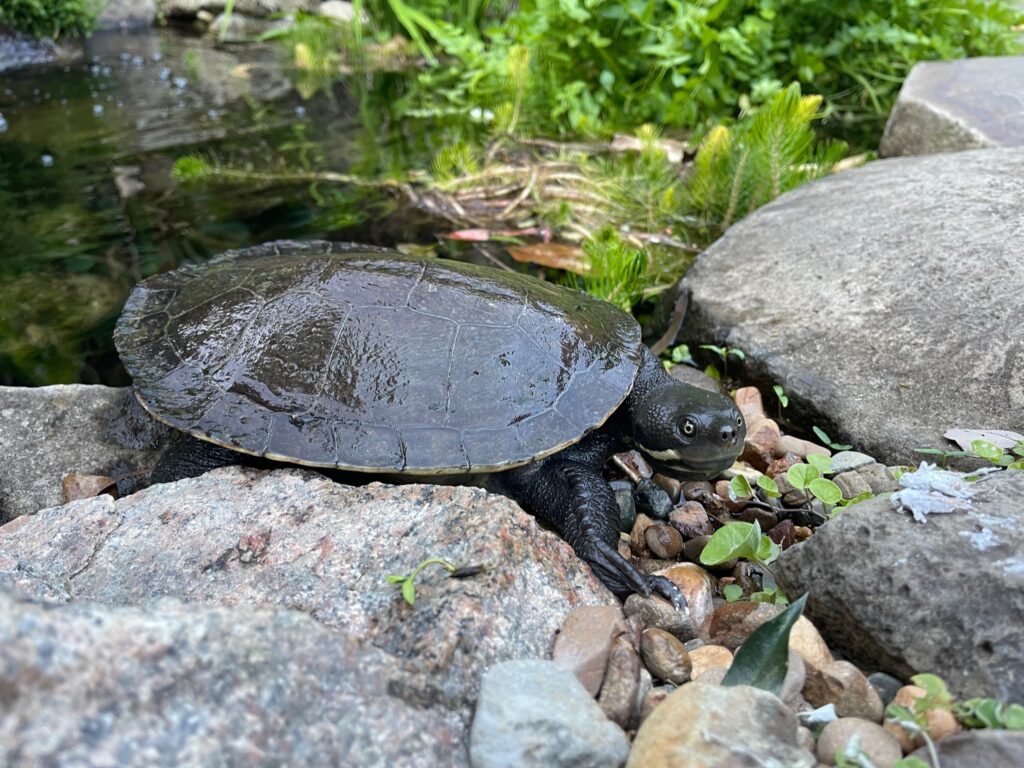
If your pond is home to turtles, you’ll probably notice they spend much more time basking in the sun during winter.
Like fish, turtles slow down as temperatures drop. They still need access to a suitable basking area where they can warm themselves naturally, but they generally eat less and move around less than they do in summer.
This quieter behaviour is completely normal and doesn’t usually indicate a health problem.
Water Lilies Take a Well-Earned Rest
One of the biggest changes you’ll notice is your water lilies.
Many lilies stop flowering during winter and much of their foliage begins to die back. This is simply part of their natural growth cycle.
The underground rhizomes remain healthy beneath the water, storing energy ready for spring when new leaves and flowers begin to emerge.
Winter is a great time to remove dead foliage and tidy your lilies, but avoid removing healthy rhizomes as these are what produce next season’s growth.
Aquatic Plants Slow Their Growth
Marginal plants, rushes and many aquatic species also reduce their growth during winter.
Some varieties remain green all year, while others become untidy as older foliage dies back.
A light prune can keep your pond looking neat while allowing healthy new growth to emerge in spring.
Beneficial Bacteria Keep Working
Your pond’s biological filter doesn’t stop working during winter—it simply slows down.
The beneficial bacteria responsible for breaking down fish waste remain active but process nutrients at a slower rate because of the cooler water temperatures.
This is another reason why lighter feeding during winter helps maintain excellent water quality.
What About Algae?
Many pond owners expect algae to disappear completely during winter.
While green water often becomes less noticeable due to shorter daylight hours, string algae can still develop if excess nutrients are present.
The good news is that a healthy ecosystem, good circulation and regular maintenance continue to be the best long-term solution, regardless of the season.
Should You Turn Your Pump Off?
No.
In South East Queensland there’s generally no reason to turn your pond pump or filtration system off during winter.
Keeping water circulating helps maintain oxygen levels, supports your biological filtration and prevents stagnant areas developing within the pond.
Your pump is working just as hard for your ecosystem in winter as it is during summer.
Winter Is an Excellent Time for Pond Maintenance
Because plant growth has slowed, winter is actually one of the easiest times to carry out maintenance.
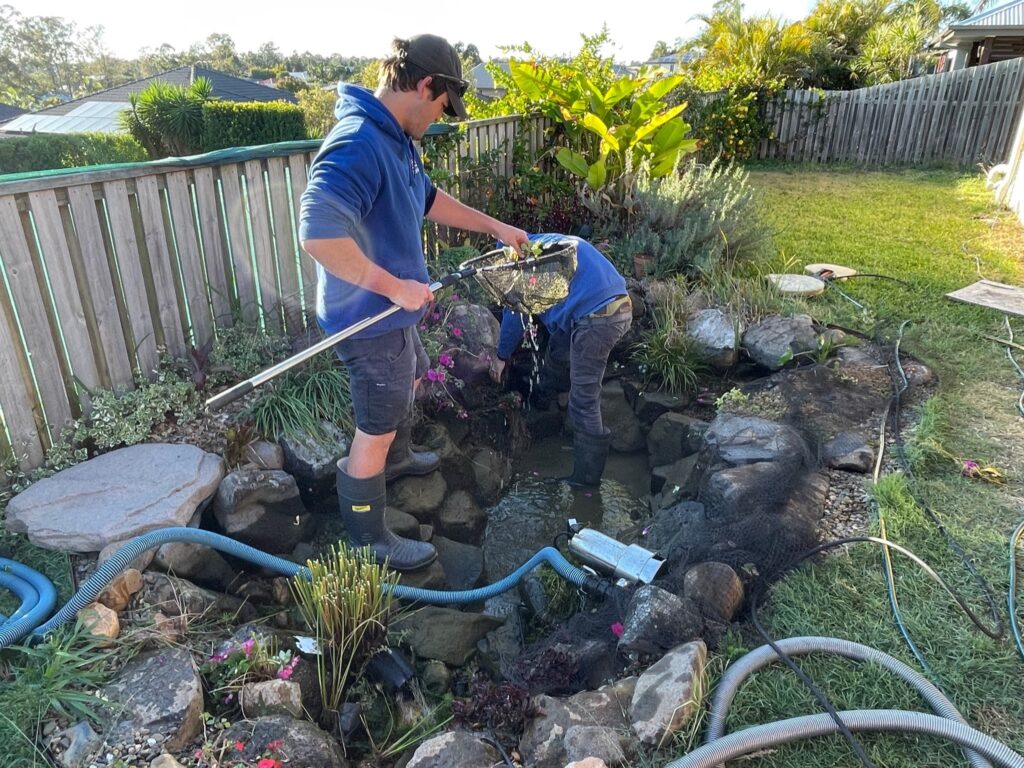
Professional winter maintenance may include:
- Cleaning skimmer and filter systems.
- Removing built-up leaves and debris.
- Trimming aquatic plants.
- Inspecting pumps and pipework.
- Checking water quality.
- Removing accumulated sludge where required.
- Preparing the pond for spring growth.
Regular maintenance during winter means fewer problems when temperatures begin to rise again.
What Not to Do During Winter
While winter is generally an easy season for pond owners, there are a few things to avoid.
- Don’t overfeed your fish.
- Don’t assume your turtles are unwell simply because they’re quieter.
- Don’t remove all your aquatic plants.
- Don’t switch off your filtration system.
- Don’t ignore fallen leaves or organic debris building up in the pond.
Small jobs completed now can prevent much bigger maintenance issues later.
A Little Care Now Makes Spring Even Better
Winter is nature’s pause button.
Your fish are conserving energy, turtles are enjoying the sunshine, water lilies are resting beneath the surface and your pond’s ecosystem is quietly ticking away in the background.
By understanding these natural seasonal changes and carrying out a little routine maintenance, you’ll be rewarded with healthier fish, stronger plants and a beautiful pond that’s ready to burst back to life when spring arrives.
If you’re unsure whether your pond is ready for the changing seasons, the team at Pond Works can help. Our professional maintenance service keeps ponds, streams and water features across South East Queensland healthy all year round, giving you more time to simply enjoy your pond.