


Herons and Pond Fish: What to Do When a Heron Visits Your Pond
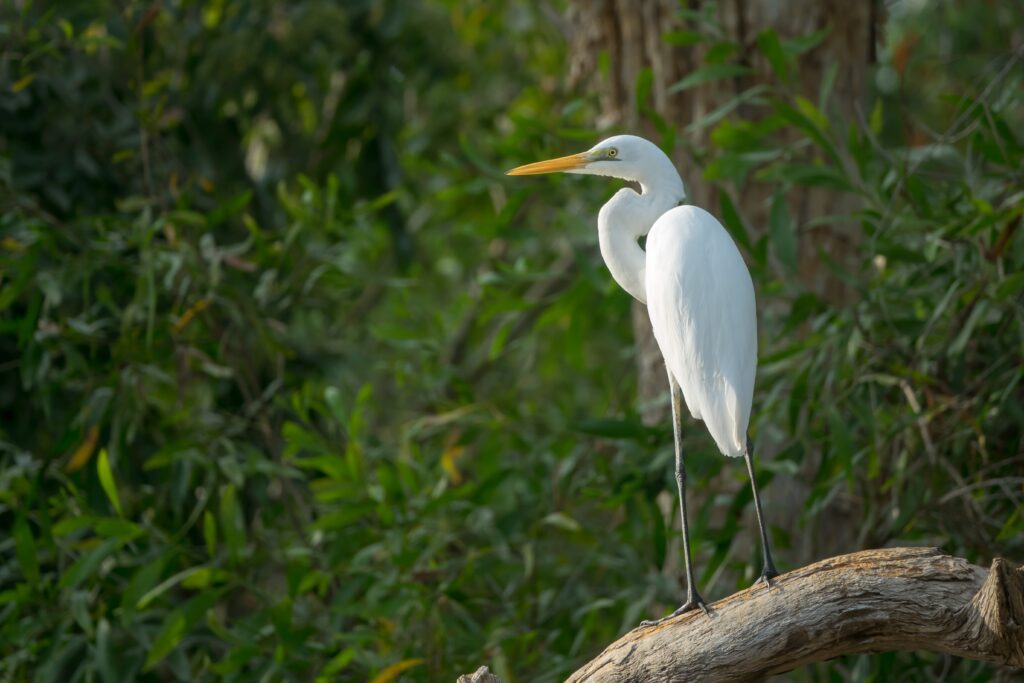
There’s a heron standing beside your pond. What do you do?
If you’ve spent time creating a beautiful pond and watching your fish grow, seeing a heron patiently standing at the water’s edge can cause an immediate moment of panic.
Is is going to eat my fish? Will it keep coming back? How do I stop it?
The good news is that seeing a heron doesn’t necessarily mean you have a problem.
A heron may simply be passing through, looking for a drink or taking advantage of an opportunity to hunt. However, if it discovers that your pond provides an easy meal and starts returning regularly, there are several practical things you can do to make you pond less attractive and your fish harder to catch.
At Pond Works, we regularly hear from pond owners who are concerned about herons, so we’ve put together this guide to explain why they visit, how much of a threat they really pose and the different ways you can protect your pond fish.
Why Do Herons Visit Ponds?
Herons are highly effective hunters.
They naturally spend their time around wetlands, creeks, rivers, dams and other waterways where they can hunt fish, frogs, insects and other aquatic animals.
Unfortunately, your backyard pond can sometimes look like a very convenient hunting ground.
A pond with clear water, visible fish, shallow edges, open access and few places for fish to hide can provide a heron with an easy opportunity to hunt.
And once a heron discovers a reliable source of food, it may return but that doesn’t mean every heron that visits your pond is going to become a regular visitor.
Will a Heron Eat My Pond Fish?
It can – but don’t panic.
Herons are predators, and fish can certainly form part of their diet. However, seeing one standing beside your pond doesn’t mean it is going to eat every fish you own.
The risk depends on your particular pond.
A pond with deeper areas, rocks, aquatic plants and plenty of hiding places is very different from a shallow, open pond where fish are easily visible.
This is why pond design can play an important role in protecting fish from predators.
Your pond is an ecosystem, not an aquarium. Wildlife will occasionally interact with it, and some of that interaction is simply part of having a living water feature.
I’ve Seen a Heron. Should I Be Worried?
Not necessarily.
This is probably the most important thing to remember.
If you’ve seen a heron once, you don’t necessarily nee to rush out and cover your pond or install deterrents.
Keep an eye on what happens.
If the bird flies away and you don’t see it again, there may be nothing more to do.
If it starts returning regularly, particularly if you notice it actively hunting your fish, then it is worth considering some additional protection.
Think about the difference between:
“I saw a heron beside my pond this morning.”
and
“A heron has been coming back every morning and I’ve lost several fish.”
Those are very different situations.
How Can I Protect My Pond Fish From Herons?
There isn’t one magic solution that will work for every pond.
The most appropriate option depend of the design of your pond, the fish you keep, how often the heron visits, the location of the pond and how important the appearance of the pond is to you.
Here are some of the most common options:-
1. Pond Netting
Pond netting is one of the most straightforward ways to physically prevent a heron from accessing your fish.
A properly installed net creates a physical barrier between the bird and the water.
It can be particularly useful where:
- A pond contains valuable or prized fish
- A heron is visiting repeatedly
- the pond is shallow and open
- Other deterrents haven’t worked
- Temporary protection is required
The downside?
Netting can change the appearance of your pond.
If you’ve spent money creating a beautiful natural-looking ecosystem pond, covering it with netting may not be the look you want.
It also needs to be installed correctly.
Loose or poorly positioned netting can create hazards for wildlife, pets and people, so it shouldn’t simply be thrown over the pond and left there.
For some ponds, however, netting may be the most practical and reliable option.
2. Fishing Line or Grid Systems
Another option is to make it difficult for the heron to land and wade into the pond by creating a grid or series of lines over the water.
Fishing line can be arranged across the pond so that the bird cannot easily walk into the water or find a clear landing spot.
The principle is simple:
If the heron can’t comfortably land, wade and position itself for a strike, the pond becomes a much less attractive hunting ground.
One advantage of of this approach is that it can be considerably less visually intrusive than covering the entire pond with netting.
However, it needs to be carefully designed and installed.
Consider the safety of:
- People
- Children
- Pets
- Wildlife
- Other birds
A fishing-line grid should never be installed in a way that creates an entanglement hazard.
It also needs to be appropriate for the particular shape and location of your pond.
3. Motion-Activated Deterrents
Motion-activated deterrents can be another option for a persistent visitor.
These devices detect movement and produce a response designed to startle the bird, for example, a sudden movement, sound or burst of water.
Motion-activated water sprinklers can be particularly useful because the sudden spray can surprise a visiting bird.
The aim is to make the pond an unpredictable and less convenient place to hunt.
But don’t expect a guaranteed solution.
Wild animals are clever.
A deterrent that works brilliantly on one pond may be less effective on another. A bird may also become accustomed to a particular deterrent if it discovers that there is no real consequence to returning.
For that reason, motion-activated deterrents are best thought of as one tool in your toolbox rather than a guaranteed solution.
4. Bird-Deterrent Lasers
Laser bird deterrents are another option that some pond owners use when dealing with persistent bird visits.
These systems use a moving beam of light to create a visual disturbance across the pond and surrounding area. The movement of the light can make the location less appealing to birds and encourage them to move away.
Unlike a stationary visual deterrent such as a plastic owl, the moving light provides a changing stimulus, which can make it more difficult for birds to simply become accustomed to it.
Are lasers a guaranteed solution?
No. As with other heron deterrents, there is no guarantee that a laser will prevent a determined bird from returning.
Effectiveness can depend on the individual bird, the pond’s surroundings, the time of day and how the system is used.
If considering a laser deterrent, use a purpose-designed bird deterrent system and follow the manufacturers instructions. Ordinary laser pointers are not a suitable substitute.
Lasers are best considered as another option in your toolbox, particularly where a pond owner wants to try a non-physical deterrent before considering physical protection.
5. Give Your Fish Somewhere to Hide
This is one of the most important things you can do and it starts with the pond itself. Fish need somewhere to retreat when they feel threatened.
A well-designed ecosystem pond can incorporate:
- Deeper water
- Rocks and caves
- Overhanging rocks
- Aquatic plants
- Water lilies
- Sheltered areas
- Different depths and levels
When a heron arrives, fish should have somewhere to disappear.
The more exposed the fish are, the easier they are to catch.
This is why we don’t recommend thinking about heron protection simply as:
“How do I stop the bird?”
Sometimes the better question is:
“How can I make my fish harder to catch?”
6. Use Aquatic Plants as Natural Cover
Plants aren’t just decorative.
They are an important part of a healthy pond ecosystem is and can also provide fish with valuable cover.
Water lilies can create shade and overhead cover, while other aquatic and marginal plants can help break up large areas of open water and give fish places to retreat.
However, you don’t want to completely cover the pond.
You still want good water movement, access for maintenance and a healthy balance of sunlight and shade.
The aim is to create a shelter, not a jungle.
7. Look at the Shallow Areas of Your Pond
Herons are wading birds, so shallow water can provide an excellent hunting environment.
If your pond has large, open areas of shallow water where fish can easily be seen, you may be giving the heron exactly what it wants.
This doesn’t mean every pond should be deep.
Shallow areas are an important part of many natural pond ecosystems.
But a combination of shallow areas, deeper water, rocks, planting and fish refuge can make a significant difference to how accessible your fish are.
If you’re designing a new pond, this is something worth considering from the beginning.
If you have an existing pond, you may also be able to improve fish refuge without changing the entire pond.
8. Try a Combination of Deterrents
Sometimes the most effective approach isn’t one particular deterrent. It’s several things working together.
For example, you might combine:
- Fish shelter and deeper areas
- Aquatic planting
- A fishing-line grid
- Motion-activated deterrents
- A bird-deterrent laser
- Temporary netting
The aim is to make your pond a less convenient hunting location.
A heron looking for an easy meal may decide that somewhere else is easier.
But again, there are no guarantees.
What About Fake Owls and Heron Decoys?
You’ll find plenty of advice online recommending fake owls, plastic predators, heron decoys and other visual deterrents.
They may provide some short-term benefit, but we wouldn’t rely on them as a permanent solution.
A stationary plastic predator sitting beside your pond isn’t particularly convincing once a clever bird works out that it never moves.
If you do use visual deterrents, think of them as one tool in your toolbox rather than the solution to the problem.
What About Your Fish?
If your fish are particularly important to you – because of their size, age, sentimental value or simply because you’ve invested heavily in them – you may want to take a more proactive approach when a heron starts visiting.
How much protection you put in place, and what you decide to do with your fish, is ultimately up to you.
Some pond owners are comfortable accepting the occasional visit from wildlife. Others would prefer to take every possible precaution to protect their fish.
The options include:
- Adding physical protection such as pond netting
- Installing a fishing-line grid
- Using motion-activated deterrents
- Using a bird-deterrent laser
- Improving fish refuge within the pond
- Combining several deterrent methodds
- Temporarily relocating fish where appropriate
There is no one-size-fits-all answer.
The right approach depends on how important your fish are to you and how much protection you want to provide.
What If My Fish Disappear?
If you’ve seen a heron and you’re also missing fish, it is certainly possible that the bird is responsible.
But don’t automatically assume it.
Fish can disappear for a number of reasons, including:
- Predation
- Poor water quality
- Disease
- Fish jumping from the pond
- Other wildlife
- Natural mortality
If fish are disappearing regularly and you are seeing a heron at the same time, it makes sense to consider some additional protection.
What If the Heron Keeps Coming Back?
If a heron has discovered your pond and keeps returning, its time to decide how much protection you want to put in place.
There is no single solution that works for every pond, so consider the options outlined above and choose what best suits your pond, your fish and your circumstances.
For some pond owners, a simple deterrent may be enough.
For others, particularly those with valuable or prized fish, a physical barrier such as pond netting may provide greater peach of mind.
The important thing is to recognise that there is no magic solution.
A persistent heron may take some persistence to discourage, and what works for one pond may not work for another.
There Is No Magic Heron Deterrent
This is worth repeating because it is probably the most important thing to remember.
There is no single heron deterrent that will work perfectly for every pond.
A motion sensor might work beautifully on one pond and be less effective on another.
A laser may discourage one bird but not another.
Netting may provide excellent protection but completely change the appearance of a pond.
A fishing-line grid may be a great option for one location but inappropriate for another.
And a pond with excellent fish refuge may dramatically reduce the chances of fish being caught without stopping a heron from visiting.
The right solution depends on your individual circumstances.
Sometimes the answer is one simple change.
Sometimes it is a combination of measures.
And sometimes the best solution is simply to watch and wait to see whether your visitor actually becomes a problem.
A Heron Doesn’t Mean You’ve Done Anything Wrong
It’s easy to become frustrated when wildlife discovers something you’ve spent a lot of time and money creating.
But a pond naturally attracts wildlife.
Frogs may arrive.
Dragonflies may appear.
Birds may stop for a drink.
And occasionally, a heron may decide your pond looks like a very convenient lunch stop.
That’s part of having a living water feature.
The goal isn’t necessarily to make your pond completely inaccessible to every wild animal.
Instead, it’s about finding a sensible balance between protecting your fish and maintaining the natural beauty of your pond.
Dealing With a Heron? Start Here.
If you’ve got a heron visiting your pond, don’t panic and don’t immediately start pulling you pond apart.
First work out whether you actually have a problem.
If you’ve seen a heron once or twice, it may simply be passing through.
I it is returning regularly and actively hunting your fish, then it’s worth putting some protection in place.
Depending on your pond and circumstances, you could consider:
- Pond netting – a physical barrier that can provide very effective protection.
- A fishing-line grid – can make it difficult for a heron to land and wade into the pond while being less visually obvious than netting.
- Bird-deterrent lasers – can provide a moving visual deterrent that may discourage persistent visitors.
- Fish refuge – deeper areas, rocks, caves and aquatic plants give fish somewhere to hide.
- A combination of methods – sometimes combining physical protection with deterrents and good fish shelter is the most effective approach.
There is no single solution that will work for every pond, and a determined heron may take some persistence to discourage.
The good news is that you don’t necessarily need to do anything at all if the bird is only an occasional visitor.
Watch what happens, protect your fish if necessary and choose the approach that best suits your pond, your fish and your surroundings.
And remember – a heron visiting your pond doesn’t mean you’ve done anything wrong.
You’ve created a water feature that attracts life, and occasionally that life includes a bird that thinks your pond looks like a very convenient lunch stop!
Need Help With Your Pond?
At Pond Works, we design, build and maintain beautiful ecosystem ponds throughout Brisbane, Moreton Bay, the Sunshine Coast, Gold Coast and South East Queensland.
With extensive experience in pond design, pond construction, pond maintenance, water features, fish ponds and ecosystem ponds, we understand that a healthy pond is about much more than simply keeping the water clear. The way a pond is designed can influence water quality, fish health, planting, wildlife and how the pond functions as a complete ecosystem.
Whether you’re planning a new pond, maintaining an existing pond or simply looking for reliable information about caring for your pond and fish, our aim is to help pond owners create beautiful, healthy and sustainable water features.
Pond Works
Design. Build. Maintain.
Ecosystem ponds, water features and pond maintenance across Brisbane, Moreton Bay, the Sunshine Coast, Gold Coast and South East Queensland.