


If you own a pond, chances are you’ve dealt with algae at some point. While a small amount of algae is a natural and healthy part of any aquatic ecosystem, excessive algae growth can quickly turn a beautiful pond into a green mess.
Understanding what type of algae you’re dealing with is the first step towards finding the right solution. In this blog, we’ll explain the two main types of pond algae, what causes them, and how beneficial bacteria and the Aquascape IonGen™ System can help keep your pond clear and healthy.
What Causes Pond Algae?
Think of algae as nature’s clean-up crew. Whenever excess nutrients are available in a pond, algae will move in to consume them.
The most common sources of excess nutrients are:
- Fish waste
- Uneaten fish food
- Decaying leaves
- Dead plant material
- Built-up sludge on the pond floor
Combined with sunlight and warm temperatures, these nutrients can trigger algae blooms. The more nutrients present, the more algae your pond is likely to produce.
The key to long-term algae control isn’t simply treating the algae itself, it’s reducing the nutrients that feed it through good filtration, beneficial bacteria, aquatic plants and regular maintenance.
Type 1: String Algae
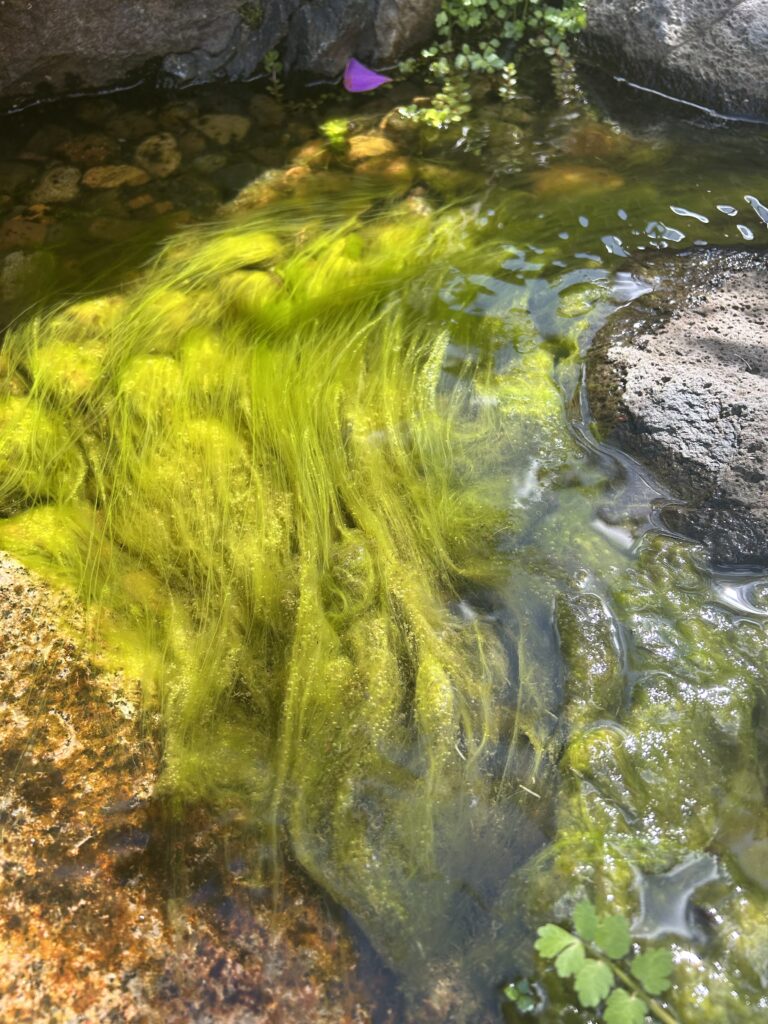
String algae, also known as blanket weed, commonly grows on rocks and waterfalls where sunlight and nutrients are abundant.
String algae, also known as filamentous algae or blanket week, appears as long strands that attach themselves to rocks, waterfalls, gravel and pond walls.
Why Does String Algae Grow?
String algae often appears when:
- Water temperatures begin to rise in spring
- Nutrient levels are elevated
- Beneficial bacteria populations are still developing after winter
- Waterfalls and streams receive plenty of of sunlight
Is String Algae Bad?
Not necessarily.
In moderation, string algae can actually benefit a pond by:
- Consuming excess nutrients
- Producing oxygen during daylight hours
- Providing habitat for small aquatic organisms
The problem occurs when growth becomes excessive and begins covering rocks, blocking waterfalls, or making the pond unattractive.
How to Control String Algae
Remove It Manually
One of the simplest methods is to physically remove excess growth by hand or using a brush.
Improve Biological Filtration
A healthy biological filter supports beneficial bacteria that compete with algae for nutrients.
Add Beneficial Bacteria
If your pond is struggling to find balance regular doses of beneficial bacteria may help break down fish waste, uneaten food and organic debris before they can fuel algae growth.
Increase Plant Coverage
Water lilies and marginal plants provide shade and compete directly with algae for nutrients.
Type 2: Green Water Algae
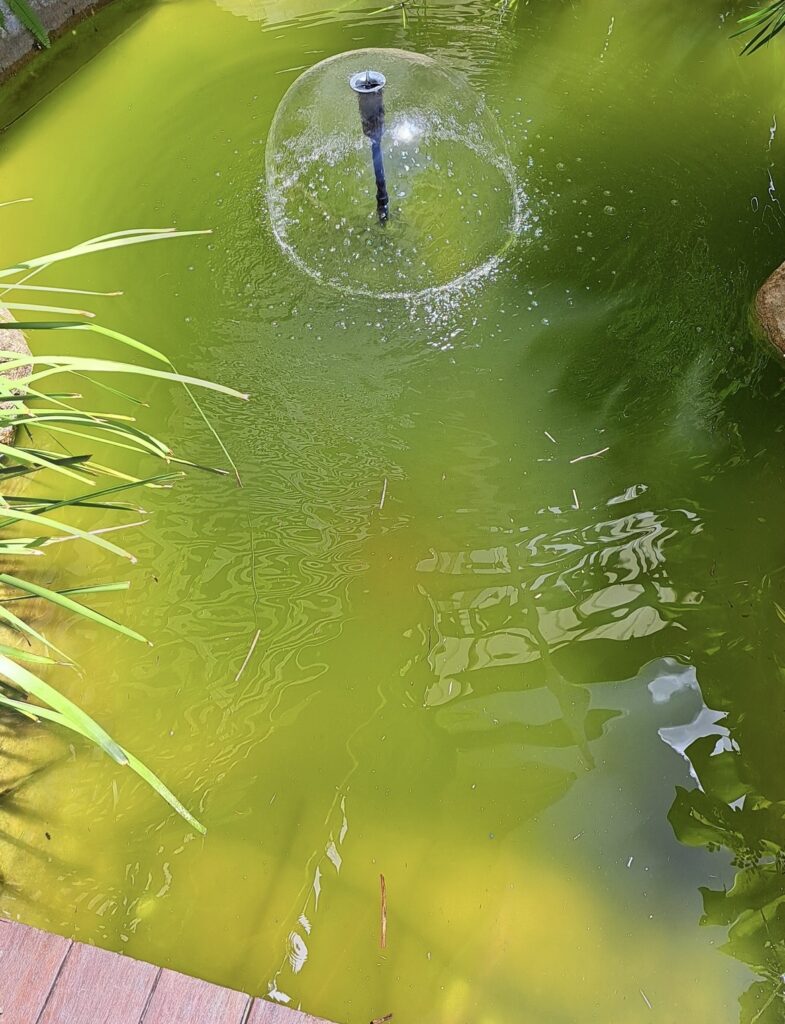
Green water algae consists of microscopic algae cells suspended in the water, reducing clarity and giving the pond a green appearance.
Green water algae consists of millions of microscopic algae cells suspended through the water column.
Unlike string algae, green water doesn’t attach to surfaces. Instead, it turns the entire pond green, often making it impossible to see fish beneath the surface.
Why Does Green Water Occur?
Green water is commonly caused by:
- Excess nutrients
- High sunlight exposure
- Insufficient biological filtration
- Seasonal temperature changes
New ponds may experience a green water bloom while the ecosystem is establishing itself.
How to Control Green Water
Maintain Good Filtration
Properly sized pumps, filters and biological filtration systems are essential.
Reduce Nutrient Build-Up
Regular pond maintenance removes accumulated sludge and organic debris.
Add Aquatic Plants
Plants compete with algae for nutrients and help create balance.
Use UV Clarification
UV clarifiers can be extremely effective for clearing green water algae by destroying free floating algae cells as water passes through the unit.
The Role of Beneficial Bacteria
Beneficial bacteria are often an important part of a healthy pond ecosystem, but they are not a silver bullet for algae problems.
These naturally occurring microorganisms help break down organic waste, including:
- Fish waste
- Uneaten fish food
- Decaying leaves
- Dead plant material
- Organic sludge
By assisting in the decomposition process, beneficial bacteria can help reduce some of the nutrients that contribute to algae growth.
What Beneficial Bacteria Can Do
Beneficial bacteria may help:
- Support biological filtration
- Improve the breakdown of organic debris
- Reduce sludge accumulation
- Assist in maintaining water quality
- Support overall pond ecosystem health
What Beneficial Bacteria Can’t Do
Beneficial bacteria cannot compensate for:
- An undersized filtration system
- Excessive fish stocking levels
- Poor pond design
- Significant nutrient overload
- Lack of routine maintenance
At Pond Works, we view beneficial bacteria as an aid to a healthy pond ecosystem rather than a standalone solution. They work best when combined with proper filtration, aquatic plants, regular maintenance and good overall pond management practices.
The Aquascape IonGen™ System
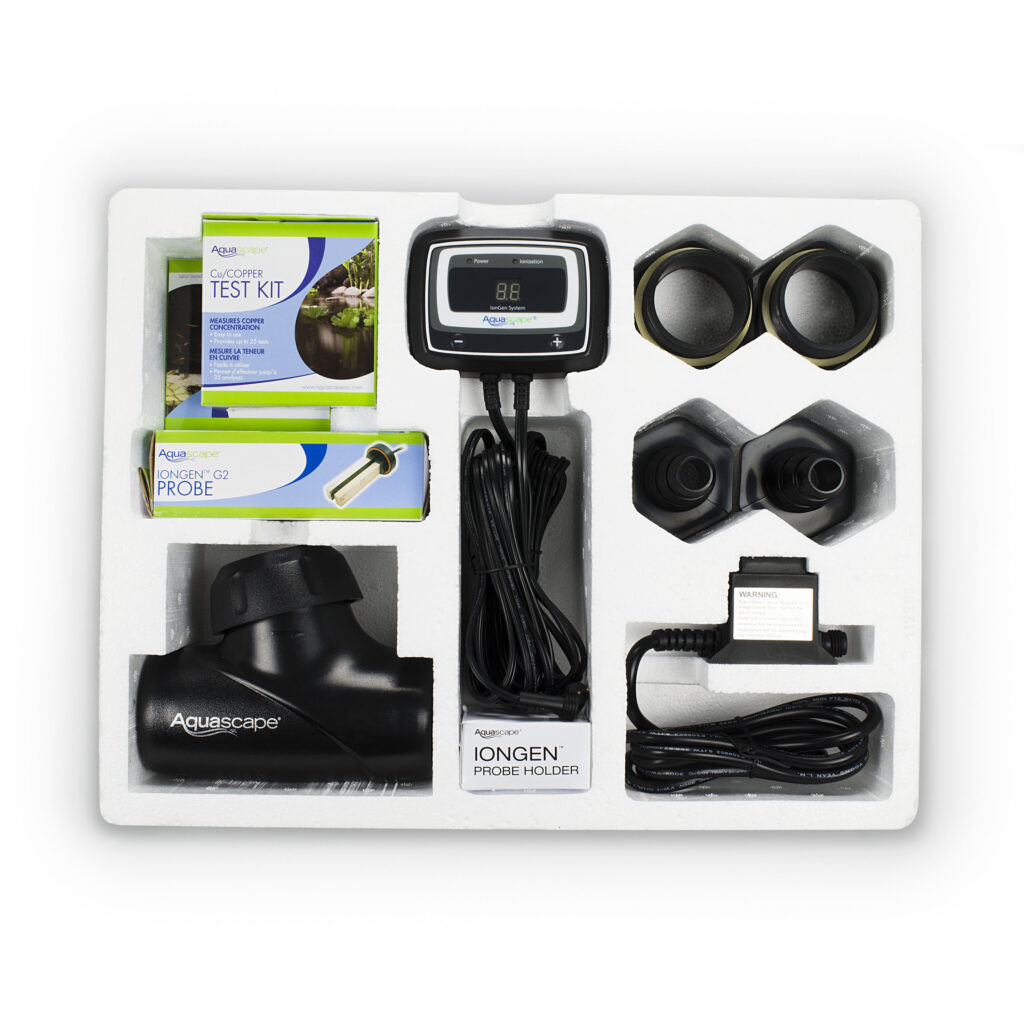
The Aquascape IonGen System is designed to help control algae growth as part of a complete pond management strategy.
For ponds that struggle with persistent algae issues, the Aquascape IonGen™ System can be an excellent additional tool.
The IonGen works by introducing controlled amounts of copper ions into the water. These ions help inhibit algae growth while remaining safe for fish, plants, and the overall pond ecosystem when used correctly.
Benefits of the IonGen System
- Helps control both string algae and green water algae
- Reduces reliance on chemical algaecides
- Works continuously in the background
- Safe for ornamental fish and aquatic plants
- Easy to install into existing pond systems
It’s important to remember that the IonGen is not a substitute for good pond design and maintenance. Instead, it works best as part of a complete algae management strategy that includes proper filtration, beneficial bacteria, aquatic plants, and routine maintenance.
The Best Approach: Balance, Not Elimination
Many pond owners assume all algae is bad and aim to eliminate it completely. In reality, a healthy pond will usually contain some algae.
The goal is not a sterile pond.
The goal is a balanced ecosystem where algae remains under control and your fish, plants, and water feature can thrive.
The Pond Works Formula for Algae Control
- Remove excess organic debris.
- Maintain adequate filtration.
- Use beneficial bacteria if needed.
- Add plenty of aquatic plants.
- Perform routine pond maintenance.
- Consider an IonGen system for ongoing algae management.
- Accept that a small amount of algae is perfectly natural.
Need Help With Pond Algae?
Every pond is different. The cause of algae problems can vary depending on pond age, fish load, filtration, plant coverage, sunlight exposure, and maintenance history.
If your pond is suffering from persistent algae problems, the team at Pond Works can assess your pond and recommend the most effective solution to restore balance and keep your water feature looking its best.
Contact Pond Works today to arrange a pond health check and let us help you enjoy a clearer, healthier pond year-round.